Air Cleaner vs. Air Purifier: Decoding the Industry Jargon to Find What You Actually Need

Air Cleaner vs. Air Purifier: Decoding the Industry Jargon to Find What You Actually Need
By the Team at Commercial Air Purifiers
If you are currently browsing online, trying to improve the air quality in your business or home, you have likely hit a wall of terminology. You search for "air purifier," and you see sleek portable towers. You search for "air cleaner," and you see metal boxes attached to furnaces or industrial ceiling units. You see "scrubbers," "sanitizers," and "ionizers."
The confusion is frustrating. You have a simple problem—maybe it’s cigarette smoke in a lounge, drywall dust in a renovation zone, or viral concerns in a waiting room—and you just want a machine that solves it. Instead of solutions, you get a vocabulary lesson.
Are these devices the same thing? Is one better than the other? Or is it just marketing semantics designed to upsell you?
At Commercial Air Purifiers, we believe in engineering, not buzzwords. We deal in the physics of airflow and filtration. The truth is that while the terms "air cleaner" and "air purifier" are often used interchangeably in casual conversation, in the technical world, they can imply very different approaches to solving the same problem. Understanding this nuance is the difference between buying a $50 gadget that does nothing and investing in a piece of infrastructure that protects your health.
Here is the definitive breakdown of the Air Cleaner vs. Air Purifier debate, and why the name on the box matters far less than the engine inside it.
The Umbrella Term: What Does the EPA Say?
To settle the debate, we should look at the regulatory definitions. The U.S. Environmental Protection Agency (EPA) uses the term "Air Cleaner" as the broad, umbrella category.
According to the EPA’s technical summaries, an Air Cleaner is any device that removes pollutants from indoor air. Under this definition, an "Air Purifier" is simply a specific type of Air Cleaner.
However, in the marketplace and the HVAC trade, these terms have evolved to signal different form factors and technologies.
-
"Air Cleaner": Usually implies a device integrated into the central HVAC system (like a media cabinet) or a simple mechanical filter designed to catch dust. It is often associated with "whole-house" or "whole-building" solutions.
-
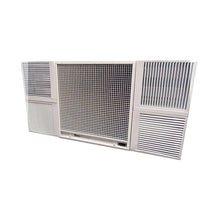
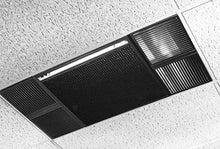
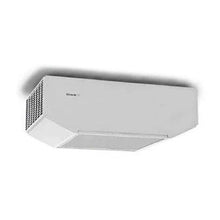
"Air Purifier": Usually implies a standalone, portable, or ceiling-mounted unit designed to target specific pollutants (like smoke, odors, or viruses) using higher-grade filtration like HEPA and Activated Carbon. It implies a higher level of "polishing" the air.
The Context:
Indoor air quality is often 2 to 5 times worse than outdoor air (EPA). Whether you call the machine a cleaner or a purifier, the goal is the same: to reduce the particulate and chemical load in the environment. The confusion arises when consumers assume that a "Whole House Air Cleaner" installed in their furnace will do the same job as a commercial-grade "Air Purifier" sitting in their living room. (Spoiler: It usually won’t).
Deep Dive: The "Air Cleaner" (HVAC Integration)
When a contractor offers to install an "Air Cleaner," they are typically talking about a Media Cabinet or an Electronic Air Cleaner (EAC) that slides into your ductwork near the furnace or air handler.
How It Works:
It relies on the blower motor of your central heating and cooling system. As air circulates through the ducts to heat or cool the building, it passes through this filter.
The Limitations:
-
Static Pressure: Your central HVAC system is designed to move air for temperature control, not filtration. If you put a dense filter (like HEPA) into an HVAC Air Cleaner slot, it creates too much resistance. The airflow chokes, the motor strains, and your AC coils can freeze. Therefore, most "Air Cleaners" use lower-efficiency filters (MERV 8-13) that catch dust but miss fine smoke and viruses.
-
Dependency: It only works when the heat or AC is running. If the thermostat is satisfied, the air stops moving, and the cleaning stops.
-
Dilution vs. Extraction: It cleans the air for the whole building slowly. It is terrible at handling a specific "source" of pollution (like a cigar smoker in one room or a printer in an office).
Deep Dive: The "Air Purifier" (Targeted Scrubbing)
When we talk about commercial-grade solutions, we are usually talking about Air Purifiers (or Air Scrubbers). These are standalone units with their own dedicated motors.
How It Works:
An air purifier doesn't care about your thermostat. It sits in the room with the pollution source and recirculates the air in that specific zone continuously.
The Advantages:
-
"Overkill" Filtration: Because these units have their own high-torque motors, they can push air through much denser filters. This allows us to use True HEPA (99.97% efficiency) and massive beds of Activated Carbon without worrying about restricting the building's central airflow.
-
High Velocity: A commercial air purifier can be sized to turn the air over in a specific room 15 times an hour. An HVAC Air Cleaner might only turn the air over 2-4 times an hour.
-
Odor Removal: Central Air Cleaners rarely have enough carbon to stop odors. Standalone Commercial Purifiers can hold 30+ pounds of carbon, making them legitimate "Smoke Eaters."
The "Purifier" Marketing Trap: Filtration vs. Sanitization
Another layer of confusion comes from marketing companies trying to differentiate their products by claiming they "purify" (sanitize) rather than just "clean" (filter).
You will see devices marketed as "Purifiers" because they use technologies like:
-
UV-C Light: Claims to kill bacteria.
-
Ionization: Claims to drop particles from the air.
-
PCO (Photocatalytic Oxidation): Claims to destroy VOCs.
The Commercial Reality:
While these technologies have their place, mechanical filtration (trapping dirt in a filter) is still the gold standard.
-
The ASHRAE Stance: ASHRAE (American Society of Heating, Refrigerating and Air-Conditioning Engineers) recognizes mechanical filtration (HEPA) as the primary and most reliable method for particle removal.
-
The Ozone Risk: Many "filterless purifiers" generate Ozone as a byproduct. The EPA warns against using ozone generators in occupied spaces.
-
Our Stance: At Commercial Air Purifiers, we believe a machine is only a true "Purifier" if it physically removes the contaminant from the room using HEPA and Carbon. Zapping it with a light is secondary to trapping it in a filter.
The Real Metric: Stop Looking at the Name, Look at the Numbers
Whether the box says "Cleaner," "Purifier," "Scrubber," or "Sanitizer," there are only two metrics that determine if the machine will actually work. If you ignore the name and look for these two numbers, you will never be ripped off.
1. CADR / CFM (The Horsepower)
It doesn't matter how fancy the technology is; if the machine doesn't move air, it doesn't clean air.
-
Consumer Metric: CADR (Clean Air Delivery Rate). This is used for small residential appliances.
-
Commercial Metric: CFM (Cubic Feet per Minute). This is the raw measure of air volume.
To clean a room effectively, you need to cycle the entire volume of air 6 to 12 times per hour (ACH). A small "Air Cleaner" moving 50 CFM is useless in a 500-square-foot room. You need industrial power.
The Calculation:
$\text{Room Volume (L x W x H)} \times \text{Desired ACH} / 60 = \text{Required CFM}$
Example: A smoking lounge (20x20x10) needs 15 air changes per hour.
$(4,000 \text{ cubic feet} \times 15) / 60 = 1,000 \text{ CFM}$.
You need a unit that delivers 1,000 CFM. It doesn't matter what you call it; if it only moves 200 CFM, it will fail.
Don't Guess. Use our CFM Calculator. Plug in your room dimensions, and it will tell you exactly how much airflow you need.
2. Media Weight (The Capacity)
This is the secret that manufacturers hide.
-
Cheap "Air Cleaner": Uses a carbon "pre-filter" that weighs a few ounces. It saturates in days.
-
Commercial "Air Purifier": Uses deep-bed carbon canisters weighing 15+ pounds.
If you are trying to remove smoke or chemicals, the name "Purifier" means nothing if the unit doesn't have the physical weight of carbon required to adsorb the gas.
Residential Plastic vs. Commercial Steel
Another major differentiator between what consumers buy (Air Cleaners) and what pros buy (Air Purifiers) is build quality.
The Residential "Air Cleaner"
-
Material: Injection-molded plastic.
-
Problem: Plastic is porous. If you use it in a smoking environment or a nail salon, the plastic absorbs the odors. After a year, the machine itself smells bad.
-
Duty Cycle: Designed to run for a few hours a day.
The Commercial "Air Purifier"
-
Material: Powder-Coated Steel.
-
Advantage: Non-porous. Wipe it down with a solvent, and it’s like new. It never retains odors.
-
Duty Cycle: Designed to run 24/7/365 without the motor overheating.
Comparison: Which One Do You Need?
To simplify the decision, map your problem to the solution type.
Scenario A: General Dust Control
-
The Problem: You want less dust on the bookshelves and fewer allergy symptoms in a normal home.
-
The Solution: Whole-House Air Cleaner (HVAC integrated).
-
Why: MERV 11 or MERV 13 filters in your furnace are sufficient for dust, and they treat the whole house quietly.
Scenario B: Smoke, Odors, or Chemicals
-
The Problem: Cigarette smoke, wildfire smoke, kitchen grease, or chemical fumes from a hobby/business.
-
The Solution: Standalone Commercial Air Purifier (Smoke Eater).
-
Why: You need Activated Carbon (pounds of it) and high CFM to catch the smoke before it settles. Your HVAC system cannot handle this load.
Scenario C: Infection Control (Medical/Dental)
-
The Problem: Fear of airborne viruses in a waiting room.
-
The Solution: Commercial HEPA Purifier.
-
Why: You need True HEPA (99.97%) efficiency. HVAC systems usually can't handle HEPA restriction. A standalone unit gives you the medical-grade filtration required.
Frequently Asked Questions
Q: Is an Air Scrubber the same as an Air Purifier?
A: In the trade, "Air Scrubber" usually refers to a rugged, portable unit used on construction sites (negative air machines). They are functionally identical to heavy-duty air purifiers (Motor + HEPA), but they are built to be ductable and thrown in the back of a truck. A "Commercial Air Purifier" is often the same technology but packaged for a ceiling mount or a finished indoor space.
Q: Can I use both an HVAC Air Cleaner and a Portable Purifier?
A: Yes, this is the ideal setup. Use a MERV 13 Air Cleaner in your central system to keep the background dust levels low, and use a specialized Commercial Air Purifier in "high traffic" or "high pollution" zones (like the living room or smoking den) to handle the heavy lifting.
Q: Why are Commercial Air Purifiers so much louder?
A: They aren't necessarily louder, but they are more powerful. A commercial unit running on "Low" can move more air than a residential unit on "Turbo," often doing so more quietly. However, at full power, a commercial unit is moving massive amounts of air (1,000+ CFM), and the sound of wind is unavoidable. We view this as the sound of performance.
Conclusion: Engineering Over Terminology
In the end, the battle of "Air Cleaner vs. Air Purifier" is a distraction. The terms are used so loosely by marketing departments that they have lost their technical specificity.
What matters is Physics.
-
Does the machine have a True HEPA filter for particles?
-
Does it have pounds of Activated Carbon for odors?
-
Does it have the CFM to cycle the air in your room 10+ times an hour?
-
Is it built from steel so it lasts?
If the answer to those questions is "Yes," it doesn't matter what you call it. It’s a solution.
Don't get lost in the jargon. Get the hard numbers for your space. Use our CFM Calculator to determine exactly how much power you need. Then, browse our collection of Commercial Smoke Eaters and Air Scrubbers to find the heavy-duty machinery that solves the problem for good.
References:
-
U.S. Environmental Protection Agency (EPA). "Guide to Air Cleaners in the Home."
-
ASHRAE. "Standard 52.2-2017: Method of Testing General Ventilation Air-Cleaning Devices."
-
Centers for Disease Control and Prevention (CDC). "Air Cleaning Technologies."