Air Humidifier vs Air Purifier: Which One Do You Actually Need?

By the Team at Commercial Air Purifiers
It starts with a morning symptom. Maybe you wake up with a scratchy throat and dry eyes. Or perhaps you are battling a persistent cough that won’t go away. You know something is wrong with the air in your home or office, but when you go online to fix it, you are faced with a binary choice that confuses millions of people every year: Air Humidifier vs. Air Purifier.
To the uninitiated, they seem similar. Both sit in the corner of the room, plug into the wall, and hum quietly while "treating" the air. But in reality, these two machines are as different as an oven and a refrigerator. They perform opposite functions for completely different problems.
Choosing the wrong one isn't just a waste of money; it can actually make your health issues worse. For example, adding humidity to a room with a mold problem is like throwing gasoline on a fire. Conversely, trying to cure dry skin with an air purifier is a scientific impossibility.
At Commercial Air Purifiers, we deal in industrial-grade air quality. We believe in "Overkill" engineering—using the right tool for the job, and ensuring that tool is powerful enough to make a difference. Whether you are managing a commercial facility or protecting your family at home, you need to understand the physics of the air before you plug anything in. Here is the definitive guide to the battle between hydration and filtration.
The Core Difference: Adding vs. Subtracting
The simplest way to distinguish these devices is to look at what they do to the atmosphere in your room.
-
The Humidifier (The Adder): This device adds water vapor to the air. Its sole purpose is to raise the Relative Humidity (RH) levels. It does not clean, sanitize, or filter anything.
-
The Air Purifier (The Subtractor): This device removes contaminants from the air. It uses a fan to force air through filters that trap solids (dust/smoke) and adsorb gases (odors/chemicals). It generally does not change humidity levels.
The Context of Indoor Air Quality (IAQ) According to the Environmental Protection Agency (EPA), indoor air pollution is a top five environmental health risk. However, "pollution" is a broad term. It can mean dry air (low humidity), which dries out mucous membranes and makes you susceptible to viruses. Or, it can mean dirty air (high particulate matter), which triggers asthma and allergies.
You need to diagnose the "patient" (your room) before you prescribe the "medicine" (the machine).
Deep Dive: The Air Humidifier
A humidifier is essentially a water distribution system. It is vital in winter months or arid climates where running a heater dries the air out, dropping humidity below 30%.
When to Use It:
-
Dry Skin/Eczema: Low humidity sucks moisture from your skin.
-
Respiratory Irritation: Dry air dries out the cilia (tiny hairs) in your nose, which are your body’s first line of defense against viruses.
-
Static Electricity: If you get shocked every time you touch a doorknob, your air is too dry.
-
Preservation: In commercial settings, humidifiers are used to prevent wood floors from cracking or to keep printing paper from curling.
The Hidden Danger: The "White Dust" and Mold While humidifiers are useful, they come with significant risks if you buy a cheap residential unit.
-
Mineral Dust: If you use tap water in an ultrasonic humidifier, the minerals (calcium/magnesium) are shattered into microscopic dust and sprayed into the air. This creates a fine white powder that coats your furniture. More dangerously, you breathe this dust in. The EPA warns that this can irritate lungs.
-
The Petri Dish Effect: Standing water is a breeding ground for bacteria and mold. If you don't clean a humidifier daily, it becomes a bio-aerosol generator, spraying mold spores into the air.
Deep Dive: The Air Purifier
An air purifier is a defense system. It is designed to physically capture the invisible threats floating in your space.
When to Use It:
-
Allergies/Asthma: To remove pollen, pet dander, and dust mites.
-
Smoke: Whether from cigarettes, wildfires, or a kitchen.
-
Viruses: To capture airborne pathogens (like flu or COVID-19).
-
Odors/Chemicals: To remove VOCs (Volatile Organic Compounds) from paint, cleaning supplies, or renovations.
The Commercial Standard: Unlike humidifiers, which can be simple, air purifiers require complex engineering.
-
HEPA Filtration: To catch the particles (dust/virus).
-
Activated Carbon: To catch the gases (odors).
-
Sealed Systems: A commercial unit is sealed so that 100% of the air goes through the filter, not around it.
The "Combo" Trap: Why 2-in-1 Units Fail
We often see consumers trying to save space by buying a "Humidifying Air Purifier." It sounds efficient. In practice, it is usually a disaster.
Physics Problem 1: Moisture Ruins Filters HEPA filters are made of dense fibers. If they get damp, they become a perfect environment for mold growth. By putting a water tank inside an air purifier, you are introducing moisture directly to the filter media. If that filter gets wet, it can start smelling like mildew, ruining the air quality you are trying to improve.
Physics Problem 2: Competing Goals To humidify a room effectively, you usually need a gentle dispersion of mist. To purify a room effectively, you need high-velocity airflow (CFM). A machine trying to do both usually ends up being a terrible humidifier (too weak) and a terrible purifier (too slow).
Our Recommendation: Keep them separate. Buy a dedicated, commercial-grade air purifier to clean the air, and a separate humidifier to treat the dryness. Place them on opposite sides of the room.
Commercial vs. Residential: The "Overkill" Necessity
Whether you choose a humidifier or a purifier, the market is flooded with plastic toys. At Commercial Air Purifiers, we believe in "Overkill" engineering because durability dictates performance.
The Humidifier Scenario: In a commercial print shop or a museum, you don't use a plastic bowl on a desk. You use industrial steam injection or high-pressure misting systems integrated into the HVAC. Why? Because a small residential unit runs out of water in 4 hours.
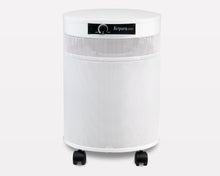
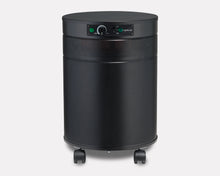
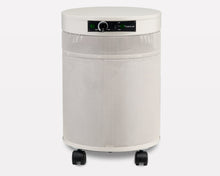
The Air Purifier Scenario: In a busy office or a home with wildfire smoke, a plastic air purifier from a big-box store is insufficient.
-
Plastic vs. Steel: Residential units absorb odors into their plastic casing. Commercial units use powder-coated steel housings that never retain smells.
-
Continuous Duty: You need a motor that can run 24/7/365. Residential motors overheat. Commercial motors are built for continuous duty cycles.
The CFM Rule: Sizing the Solution
If you determine that you need an Air Purifier (because your problem is dust, smoke, or allergies), you cannot guess at the size. You need to move volume.
The effectiveness of an air purifier is measured in CFM (Cubic Feet per Minute). You need to cycle the air in the room enough times to actually clean it.
The Air Change Calculation (ACH):
-
Residential/Light Commercial: 4–6 Air Changes Per Hour.
-
Smoke/Heavy Allergies: 6–12 Air Changes Per Hour.
The Formula:
Example: Your master bedroom or office is 15’ x 20’ with 8’ ceilings. Volume = 2,400 Cubic Feet. You want 6 Air Changes Per Hour to keep allergies at bay. .
You need a unit that delivers at least 240 CFM.
-
The Trap: A small unit might claim 250 CFM, but only on "Turbo" mode (loud). A commercial unit rated for 800 CFM can run on "Low" to give you that 240 CFM in total silence.
Don't Guess. Use our CFM Calculator. Plug in your room dimensions, and it will tell you exactly how much power is required.
Comparative Table: At a Glance
The Verdict: Can You Use Both?
Yes. In fact, for optimal health in the winter, you often should use both.
Dry air allows viruses to travel faster and stay airborne longer. (Humid air weighs down the droplets, causing them to fall).
-
The Strategy: Use a humidifier to keep your Relative Humidity between 40% and 60% (the ideal zone according to ASHRAE).
-
The Defense: Use a commercial air purifier to scrub the airborne viruses and dust out of the air.
Placement Tip: Do not place them right next to each other. If the humidifier sprays mist directly into the air purifier’s intake, the moisture will ruin the HEPA filter (making it soggy) and saturate the carbon filter (filling the pores with water instead of smoke/odors). Keep them on opposite sides of the room.
Frequently Asked Questions
Q: Does an air purifier remove humidity? A: Generally, no. Mechanical air purifiers (HEPA/Carbon) do not remove moisture. However, Activated Carbon can adsorb some moisture from the air, but it is not a dehumidifier. If your room is too humid (damp/moldy), you need a Dehumidifier, not an air purifier.
Q: Does a humidifier clean the air? A: There is a myth that humidifiers "wash" the air like rain. This is false. While some heavy dust particles might get weighed down by water droplets and fall to the floor, the humidifier does not remove them. It just makes the floor wet. Worse, ultrasonic humidifiers can actually add fine particulate pollution (mineral dust) to the air.
Q: Which one helps with snoring? A: Usually, a Humidifier. Snoring is often caused by swollen nasal passages due to dry air. Adding moisture lubricates the throat. However, if the snoring is caused by an allergic reaction to dust mites or cat dander, an Air Purifier would be the correct solution.
Q: Why does my air purifier turn red when I run my humidifier? A: If you have an air purifier with a particle sensor, it often mistakes the water mist from an ultrasonic humidifier as "smoke" or pollution. This confirms that the humidifier is filling the air with particles (minerals/water). Switch to distilled water in your humidifier to stop this, or move the units further apart.
Conclusion: Diagnose Before You Buy
The battle of Air Humidifier vs. Air Purifier isn't about which machine is better; it is about which problem you have.
-
If your throat is dry, your skin is cracking, and it’s winter: Get a Humidifier.
-
If you are sneezing, smelling smoke, or worried about viruses: Get an Air Purifier.
But whatever you choose, do not settle for disposable plastic appliances. Your air quality determines your health. If you decide that filtration is what you need, invest in "Overkill." Invest in steel housings, sealed motors, and massive filter beds.
Validate your airflow needs today with our CFM Calculator. Then, browse our collection of Commercial Air Scrubbers to find the heavy-duty solution that ensures your air is not just moist, but truly clean.
References:
-
U.S. Environmental Protection Agency (EPA). "Use and Care of Home Humidifiers."
-
ASHRAE. "Standard 62.1: Ventilation for Acceptable Indoor Air Quality."
-
Mayo Clinic. "Humidifiers: Air moisture eases skin, breathing symptoms."
-
Centers for Disease Control and Prevention (CDC). "Ventilation in Buildings."
Ready to improve your air quality? Explore our Air Cleaners & Purifiers collection, or contact our team for a recommendation tailored to your space.