Air Purification for Nail Salon Compliance: Mastering Chemical Fume Control

Walking into a nail salon, the smell is unmistakable. That sharp, chemical tang of acetone, acrylic monomers, and polishes is often accepted as "part of the business." However, for salon owners and technicians exposed to it 8 to 10 hours a day, it is a significant occupational health hazard.
When designing a Commercial Air Purification Strategy [Link to Hub], nail salons require a specialized approach. Unlike general offices that worry about dust, or Veterinary Clinics [Link] that worry about biological pathogens, nail salons are fighting a war against Volatile Organic Compounds (VOCs). Standard ventilation is rarely enough to meet modern safety codes or to protect your staff from chronic respiratory issues. At Commercial Air Purifiers, we specialize in the heavy-duty carbon filtration necessary to adsorb these toxic fumes before they settle in your lungs.
The "Toxic Trio" and the Compliance Reality
The primary concern in nail salons involves what is often called the "Toxic Trio": Formaldehyde, Toluene, and Dibutyl Phthalate (DBP). Add to this the constant evaporation of acetone and the fine particulate dust from filing artificial nails, and you have a complex air quality profile.
Regulatory bodies like OSHA (Occupational Safety and Health Administration) and the IMC (International Mechanical Code) have become increasingly strict regarding salon ventilation. In many jurisdictions, specifically complying with the 2015 IMC Table 403.3.1.1 requires specific exhaust rates per manicure station.
Failing to manage these fumes isn't just a compliance risk; it's a business risk. "Nail Salon Workers' Lung" is a documented condition, and customers are increasingly choosing salons that don't leave them with a headache after a 45-minute appointment.
Why Standard HEPA Filters Fail in Salons
This is the most common mistake we see salon owners make: buying a high-quality HEPA air purifier and wondering why the smell hasn't gone away.
HEPA filters are for particles. They do nothing for fumes.
A HEPA filter is a physical net. It catches solid things like nail dust, skin flakes, and pollen. However, chemical vapors (gases) are molecular; they pass right through the mesh of a HEPA filter like a mosquito flying through a chain-link fence.
To stop chemical fumes, you need Activated Carbon. But not just any carbon—you need mass.
-
Residential Units: Often use a carbon "impregnated foam" or a thin sheet. This might absorb odors for a week before it becomes saturated and useless.
-
Commercial Units: Use canisters filled with granular activated carbon (often 5 to 15 lbs per unit). This provides millions of square feet of surface area to adsorb chemicals for months.
The Strategy: Source Capture vs. Ambient Cleaning
For total compliance and safety, nail salons often need a two-pronged approach.
1. Source Capture (The "Snorkel")
The best way to handle fumes is to catch them before they enter the breathing zone of the technician. This is known as Source Capture [Link to Source Capture vs Ambient Air Cleaning]. These are specialized units with flexible arms (snorkels) that position the intake right next to the client's hand. They suck the acrylic fumes and filing dust directly into the filter. Many local building codes now strictly require source capture systems at every station for new salon builds.
2. Ambient Air Cleaning (The "Scrubber")
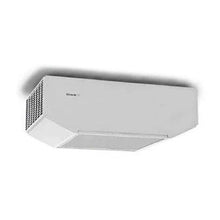
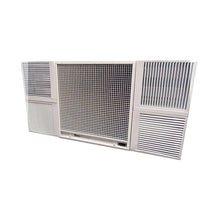
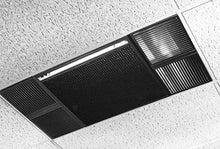
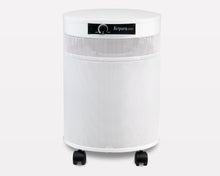
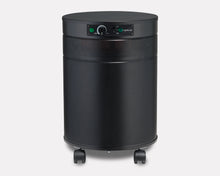
Even with source capture, fumes escape. Bottles are left open; polish dries on nails; trash cans emit vapors. An Ambient Air Cleaner is a large console unit placed centrally in the room to scrub the general air.
For ambient cleaning in a salon, you need a high Air Change per Hour (ACH) rate. Because of the constant chemical evaporation, we recommend aiming for 8 to 12 ACH. This means the air in your salon is completely filtered every 5 to 7 minutes. Use our CFM Calculator [Link: https://commercialairpurifiers.net/pages/cfm-calculator] to ensure your ambient unit is powerful enough for your square footage.
Solutions and Recommendations
When selecting equipment for your salon, look for these commercial specifications:
-
Deep-Bed Carbon: Ensure the spec sheet lists the weight of the carbon. If they don't list the weight, it's likely insufficient. You want pounds, not ounces.
-
Dual Filtration: You still need a HEPA filter for the nail dust (particulates), but it should be paired with a heavy carbon stage for the VOCs (fumes).
-
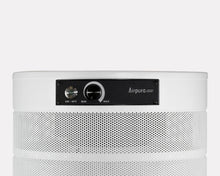
Variable Speed Control: You need the ability to ramp up the fan speed during peak hours or heavy acrylic application, and turn it down during quiet times.
Note: While Air Purification for Veterinary Clinics [Link] also uses carbon for biological odors, nail salon units often require treated carbon blends specifically targeting chemical molecular weights found in solvents.
Frequently Asked Questions
Does a window fan count as ventilation? Technically, it provides "fresh air," but it is uncontrolled. It pushes conditioned air (AC/Heat) out the window, driving up energy bills, and it doesn't filter the incoming air (pollen/pollution). A recirculating commercial purifier cleans the air without losing your climate control.
Will plants remove the acrylic smell? No. While some studies suggest plants can process VOCs, you would need hundreds of plants in a small room to make a measurable impact on the concentrated fumes of a nail salon. You need mechanical carbon filtration.
How often do I change the Carbon filter? In a busy salon doing acrylics daily, a standard carbon filter can saturate in 3-6 months. When you stop smelling the "crispness" in the air, or if the chemical smell returns, the carbon is full. Unlike HEPA filters which get more efficient as they load (until they clog), carbon filters simply stop working once their pores are full.
Conclusion
The "chemical smell" of a nail salon is not a badge of the trade; it is a sign of poor air quality management. By implementing a commercial-grade solution focused on heavy-duty Carbon filtration and proper source capture, you protect your technicians' health and offer a premium, headache-free experience for your clients.
Compliance is mandatory, but safety is a choice. Choose the best protection for your business.
Shop our Specialized Fume Extraction and Salon Air Purifiers at commercialairpurifiers.net
Ready to improve your air quality? Explore our Air Cleaners & Purifiers collection, or contact our team for a recommendation tailored to your space.