Air Purifier for COPD: Why Commercial Power is a Medical Necessity

For millions of people living with Chronic Obstructive Pulmonary Disease (COPD), breathing is not an automatic function—it is a daily exertion. Every breath requires effort, and every airborne irritant represents a potential crisis.
When you are living with compromised lung function, "clean air" isn't a luxury or a lifestyle choice. It is a medical necessity. A sudden flare-up caused by dust, smoke, or strong odors can lead to emergency room visits, hospitalization, and severe distress.
We often see families of COPD patients try to solve this problem with standard, residential air purifiers found in department stores. They buy the quietest, sleekest unit they can find, plug it in, and hope for the best. Unfortunately, hope is not a strategy. Residential units often lack the airflow to actually scrub the room, and some even introduce new irritants like plastic off-gassing or ozone.
At Commercial Air Purifiers, we believe in "overkill" engineering. While our units are designed for cigar lounges and welding shops, we frequently recommend them for COPD patients for one simple reason: Your lungs cannot afford compromise.
In this guide, we will explain why COPD requires a zero-tolerance approach to air quality and why industrial-grade filtration is the only reliable solution for protecting sensitive airways.
The Invisible Threat: Why Indoor Air is Dangerous for COPD
For a healthy person, a little dust or the smell of cleaning spray is an annoyance. For someone with COPD (which includes chronic bronchitis and emphysema), it is a trigger.
According to the EPA (Environmental Protection Agency), indoor air can be two to five times more polluted than outdoor air. In a sealed home or care facility, pollutants accumulate. These include:
-
Particulate Matter (PM2.5): Fine dust, smoke, and pet dander that can penetrate deep into the lungs.
-
VOCs (Volatile Organic Compounds): Gases released by cleaning products, paints, new furniture, and even cooking.
The Physiology of the Trigger
When these particles enter damaged lungs, they cause inflammation. The airways tighten, mucus production increases, and breathing becomes exponentially harder. The American Lung Association explicitly states that improving indoor air quality is a key component of COPD management to prevent exacerbations.
The problem is that most residential air purifiers are designed for "average" homes with "average" needs. They are designed to reduce dust on shelves, not to create a sterile environment for a patient. To truly protect a COPD patient, you need a machine that removes irritants before they can be inhaled.
The Mechanics of Protection: Speed and Capacity
To understand why a commercial unit is better for COPD, you have to understand the physics of filtration. It comes down to two variables: CFM (Speed) and Media (Capacity).
1. The Need for High CFM (The Vacuum Effect)
If you are sitting in a room and someone sprays perfume or burns toast, how fast does that smell reach you? Seconds.
If your air purifier is a low-powered residential unit moving 100 CFM (Cubic Feet per Minute), it might take 20 minutes to cycle the air in the room. By then, you have already breathed in the irritants.
You need speed. You need a machine that creates a vacuum effect, pulling air across the room and through the filters rapidly. A commercial unit moving 400 to 1,000 CFM can turn the air over in a bedroom or living area every 4 to 6 minutes. This rapid cycling ensures that dust and fumes are captured before they settle in the patient's lungs.
Do the Math: Don't guess. Use our CFM Calculator to input the room dimensions. For COPD, we recommend aiming for at least 6 to 10 Air Changes Per Hour (ACH).
2. The Danger of "Plastic" Air
This is a detail often overlooked. Most residential air purifiers are made of injection-molded plastic. When the motor runs and heats up, low-quality plastic can off-gas specific chemicals. For a COPD patient with chemical sensitivities, the air purifier itself can become a trigger.
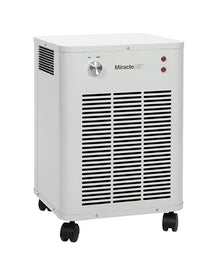
Commercial units are built with powder-coated steel or aluminum. They are inert. They do not smell. They do not off-gas. They simply sit there and work.
Filtration Requirements for COPD
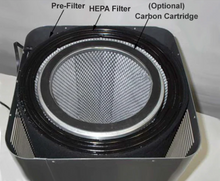
When selecting a unit for respiratory relief, you need a specific combination of filters. A single filter is rarely enough because COPD triggers come in two forms: solids and gases.
Requirement A: True HEPA (For the Solids)
You need to capture the physical particles: pollen, mold spores, dust mites, and smoke particles.
-
The Standard: You must look for True HEPA (High-Efficiency Particulate Air) filtration.
-
The Spec: As defined by the CDC (Centers for Disease Control and Prevention) and industrial standards, HEPA filters capture 99.97% of particles down to 0.3 microns.
-
The Commercial Difference: Our units use deep-bed HEPA filters with massive surface area. This allows air to flow freely without the motor straining, maintaining high CFM even as the filter loads with dust.
Requirement B: Activated Carbon (For the Gases)
HEPA filters do absolutely nothing for chemical fumes. If a neighbor is painting, or if someone uses bleach in the bathroom, a HEPA filter will let those fumes pass right through.
-
The Solution: Activated Carbon. Carbon adsorbs chemicals, trapping the gas molecules in its pores.
-
The Weight Rule: Residential units use thin carbon sheets. Commercial units use canisters filled with pounds of granular carbon. For a COPD patient sensitive to odors and chemicals, this dense carbon bed is the only barrier between them and a respiratory attack.
Requirement C: NO Ozone (The Safety Warning)
This is critical. Some "air cleaners" sold on TV use ionizers or ozone generators.
Never use an ozone generator for a COPD patient.
According to the EPA, ozone is a potent lung irritant that can scar lung tissue and trigger asthma and COPD attacks. At Commercial Air Purifiers, our HEPA/Carbon units are mechanical. They use fans and filters. They produce zero ozone. They are safe.
Why "Overkill" is the Right Choice for Patients
We often hear the question: "I don't run a factory; I just live in a house. Why do I need a commercial machine?"
The answer is durability and reliability.
-
24/7 Duty Cycle: A COPD patient needs clean air all day and all night. Residential motors often overheat or wear out if run constantly at high speed. Commercial motors are designed to run 24/7/365.
-
Maintenance: Changing filters is a chore. Residential units often require filter changes every 3 months. Commercial units, with their massive pre-filters and deep media beds, can often run for a year or more before the main filters need servicing (depending on the environment).
-
Investment: You are buying a medical-grade tool, not a disposable appliance.
Practical Steps for COPD Air Management
If you are setting up a "safe zone" for yourself or a loved one with COPD, follow this protocol.
1. Identify the Primary Zone
You likely cannot filter the entire house to hospital standards without spending a fortune. Focus on the bedroom and the main living area where the patient spends 80% of their time.
2. Calculate the CFM
Measure the bedroom. Use the CFM Calculator. If the room needs 150 CFM to get 8 air changes per hour, buy a unit rated for 300 or 400 CFM. Why? Because you can run it on "Medium" speed to keep it quiet for sleeping while still getting maximum protection.
3. Position for Airflow
Do not hide the unit behind a curtain. Place it where it can pull air from the room effectively. In a bedroom, placing it opposite the bed can help create a gentle circulation of clean air toward the sleeper.
4. Eliminate the Source
An air purifier is a defense system, but you must also stop the attacks. Stop using aerosol sprays, scented candles, and harsh cleaning chemicals. Let the air purifier handle the unavoidable dust, but don't force it to fight avoidable pollutants.
Frequently Asked Questions
1. Will an air purifier cure my COPD?
No. COPD is a chronic, progressive disease. There is no cure. However, an air purifier is a vital management tool. By removing triggers (dust, smoke, chemicals), you can reduce the frequency of flare-ups, improve sleep quality, and reduce the daily strain on your lungs.
2. Should I get a humidifier or an air purifier for COPD?
They do different things. A humidifier adds moisture (which can soothe dry airways but also promote mold if not careful). An air purifier removes toxins. Most experts recommend an air purifier as the priority to remove irritants. If you use a humidifier, use distilled water to avoid putting mineral dust into the air.
3. Is an "Ionizer" good for COPD?
We generally advise against it. Many ionizers produce trace amounts of ozone, which is harmful to damaged lungs. Furthermore, ionizers cause dust to stick to surfaces (bedding, walls) rather than trapping it. Mechanical filtration (HEPA + Fan) is the safest, most proven method for respiratory patients.
4. Does Medicare cover air purifiers for COPD?
Generally, Medicare does not cover air purifiers, as they are considered "environmental control equipment" rather than "Durable Medical Equipment" (DME). However, policies change, and some private insurance plans may offer coverage with a letter of medical necessity from a doctor. It is always worth checking, but be prepared to pay out of pocket as an investment in your health.
5. How often do I change the filters?
In a commercial unit used in a residential setting, the filters last a long time.
-
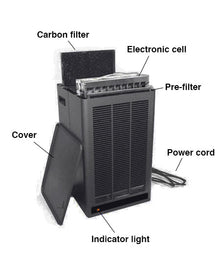
Pre-filter: Check every month. Vacuum or replace it. This catches the big dust and pet hair.
-
Carbon/HEPA: typically lasts 1 to 2 years in a home environment.
-
Indicator: Don't rely on a dummy light. If the airflow drops noticeably, the filter is full.
The Verdict: Your Lungs Deserve the Best
When you have COPD, the air you breathe is your lifeline. You cannot trust that lifeline to a budget appliance made of plastic and marketing promises.
You need physics. You need power. You need a machine that removes 99.97% of the threat, 100% of the time.
At Commercial Air Purifiers, we build machines for the toughest environments on earth—welding shops, casinos, and factories. If our units can clean the air there, imagine what they can do for the air in your bedroom.
Take a deep breath, and make sure it’s a clean one.
Invest in the protection your lungs need.
[Shop Smoke Eaters at commercialairpurifiers.net]
Ready to improve your air quality? Explore our Air Cleaners & Purifiers collection, or contact our team for a recommendation tailored to your space.