Breathe Easy: Why Only "Bird-Safe" Air Purifiers Protect Your Avian Facility

For bird owners and avian facility managers, the indoor environment is a high-stakes ecosystem. Whether you are housing a single African Grey or managing a large-scale breeding facility, you are likely dealing with two major issues: "powder down" dust that coats every surface and a profound fear of airborne toxins. Birds possess one of the most efficient, yet delicate, respiratory systems in the animal kingdom. What might be a minor irritant to a human—a whiff of perfume, a burnt piece of toast, or a trace of ozone—can be a death sentence for a bird.
The search for an air purifier safe for birds is often fraught with misinformation. Many consumer-grade air cleaners marketed as "safe" utilize electronic technologies that produce ozone as a byproduct, effectively trading one respiratory hazard for another. To protect your birds, you need to look past the marketing and understand the physics of avian respiration. In the world of commercial avian care, we believe in "Overkill" engineering: massive mechanical filtration that scrubs the air without adding any chemical or electronic byproducts.
The Avian Respiratory System: Why They Are So Vulnerable
To understand why birds need specialized air purification, you have to understand how they breathe. Unlike mammals, birds have an intricate system of air sacs and a unidirectional airflow through their lungs.
The Efficiency Trap
According to research from the CDC and various avian veterinarians, birds replace virtually all the air in their lungs with every breath. They also breathe at a much higher rate than humans—often 25 to 40 times per minute. While this efficiency allows them to sustain the high metabolic demands of flight, it also means they absorb airborne toxins and particulates much faster and more thoroughly than we do.
"Canary in a Coal Mine"
This phrase isn't just an idiom; it's a biological reality. Birds are highly sensitive indicators of environmental degradation. In a commercial setting, if your air quality is poor, your birds will show symptoms (lethargy, respiratory distress, or feather picking) long before your employees do. Common indoor pollutants like mold, dander, and particularly PTFE (Teflon) fumes or ozone are known "avian killers."
The Ozone Danger: Why "Electronic" is Not Bird-Safe
We often see business owners and pet owners buy ionic air purifiers or "plasma" generators because they are quiet and promise to "kill" odors. In an avian environment, this is a catastrophic mistake.
The Problem with Ionizers and Ozone
Many electronic air purifiers work by charging particles (ionization) or creating ozone () to break down odors. Ozone is a powerful lung irritant. While humans might tolerate low levels, the EPA warns that even small amounts of ground-level ozone can cause permanent lung damage. For a bird, whose air sacs are incredibly thin and sensitive, ozone exposure can lead to acute respiratory failure.
Secondary Pollutants
Electronic cleaners can also create secondary pollutants. When ozone reacts with common indoor chemicals (like those found in wood finishes or cleaners), it can produce formaldehyde and ultrafine particulates. To ensure your facility is truly bird-safe, you must choose a unit that is 100% mechanical—meaning it uses a motor and a filter, with no ionization, UV-C that produces ozone, or plasma features.
The Commercial Standard for Bird Rooms: Particulates and Odors
A bird-safe air purifier must handle two primary loads: the heavy particulate load of "powder down" and the gaseous load of avian waste or food odors.
1. The HEPA Requirement (Medical Grade)
Old World species like Cockatoos, Cockatiels, and African Greys produce a fine white powder (powder down) that helps keep their feathers healthy. This powder is microscopic and can quickly overwhelm the lungs of both birds and humans.
A true, commercial-grade HEPA filter is rated to capture 99.97% of particles as small as 0.3 microns. In an avian facility, you need "Overkill" surface area. While a residential HEPA might be a thin sheet of paper, a commercial HEPA is often a deep, pleated 12-inch bed that can hold pounds of bird dander before needing a change.
2. High-Capacity Activated Carbon
Birds are sensitive to gases like ammonia (from waste) and volatile organic compounds (VOCs). To remove these safely without using ozone, you need adsorption. Commercial units use deep-bed activated carbon (often 15 to 30 lbs) to physically trap gas molecules. This keeps the room smelling fresh without introducing the "sweet" chemical scent of ozone or masking agents.
3. The CFM Rule for Avian Safety
CFM (Cubic Feet per Minute) is the only way to measure if your purifier is actually doing its job. Because birds create dust constantly, you need a high number of Air Changes per Hour (ACH).
For a dedicated bird room or breeding facility, we recommend 6 to 10 ACH. This ensures that dander and spores are pulled into the filter before they can settle on surfaces or be re-inhaled. If you have a room that is 500 square feet with 10-foot ceilings, you need a unit moving at least 500 to 600 CFM. To find your exact requirements, use our .
Commercial vs. Residential: Why Build Quality Matters
When you are protecting a high-value avian collection, a plastic consumer unit is a liability.
-
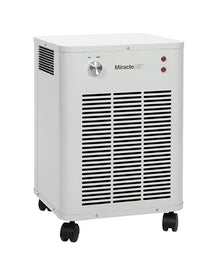
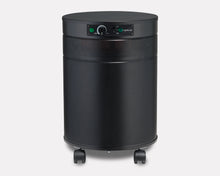
Metal Housing: Birds are curious and often chew. Plastic purifiers can off-gas chemicals when they get warm and are easily damaged by a determined parrot. Our commercial units are built with powder-coated steel, which is durable, easy to decontaminate, and completely non-toxic.
-
Continuous 24/7 Duty Cycles: Avian dust is produced 24 hours a day. Residential motors are not designed for the constant high-speed operation required to keep a bird room clean. Commercial-grade motors are designed to run indefinitely at high CFM without overheating.
-
Static Pressure: Bird dust is heavy. As the filter fills up, a weak residential fan will lose its "pull." Commercial units are engineered with high static pressure capabilities to maintain airflow even when the filters are loaded with powder down.
Specific Requirements for Avian Facilities
If you are setting up an air quality plan for a bird-occupied space, ensure your equipment meets these "Avian-Safe" markers:
-
Zero Ozone Certification: Look for units that are strictly mechanical. If it has an "ionizer" button, it shouldn't be in the bird room.
-
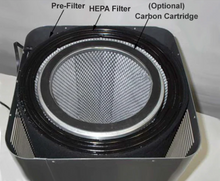
Multistage Filtration: You need a high-quality pre-filter to catch the large feathers and dander "clumps." This protects the expensive HEPA and Carbon filters from premature clogging.
-
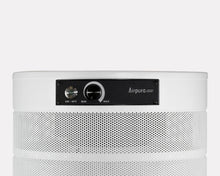
Variable Speed Control: Birds can be sensitive to noise. A high-CFM commercial unit allows you to run the machine on a medium speed that is still more powerful than a residential unit on high, providing superior cleaning with lower decibel levels.
FAQ: Air Purifiers and Bird Safety
Q: Can I use an air purifier with a UV-C light around my birds? A: Only if the UV-C light is shielded and certified not to produce ozone. However, for most bird owners, a high-quality HEPA filter is safer and more effective at removing the biological threats (like Aspergillus spores) that UV-C is intended to target.
Q: How close should the air purifier be to the bird cage? A: We recommend placing the unit 3 to 6 feet away. You want the intake to be close enough to capture dander at the source, but you don't want to create a direct draft on the bird, which can cause temperature stress.
Q: Will an air purifier help with "Bird Fancier’s Lung"? A: Yes. Hypersensitivity pneumonitis, often called Bird Fancier’s Lung, is caused by inhaling bird dander and proteins. A high-CFM HEPA purifier is the most effective way to reduce these levels in the home or office, protecting both the birds and their human caretakers.
Q: How often do I change filters in a bird room? A: In a room with "powder down" species, you should vacuum or replace the pre-filter once a month. The main HEPA and Carbon filters in a commercial unit will typically last 12 to 24 months, depending on the number of birds and the CFM settings.
Conclusion: Protect Your Birds with "Overkill" Engineering
When it comes to avian health, there is no such thing as air that is "too clean." Because of their unique physiology, birds are the ultimate test of an air purifier's effectiveness and safety. Relying on underpowered, ozone-producing residential units is a risk that few bird owners can afford to take.
By investing in high-CFM, mechanical HEPA filtration, you provide your birds with the fresh, toxin-free air they would find in the wild. Focus on the science of airflow, avoid the gimmickry of electronic cleaners, and prioritize the longevity of industrial components.
Ready to provide the ultimate respiratory safety for your birds? and find the high-CFM, zero-ozone solution your avian facility requires.
Ready to improve your air quality? Explore our Air Cleaners & Purifiers collection, or contact our team for a recommendation tailored to your space.