Clearing the Air: The Ultimate Guide to Choosing the Best Air Purifier for Your Billiards Room

By the Experts at Commercial Air Purifiers | Published: October 21, 2025
There’s a unique atmosphere to a great billiards room. It’s the satisfying crack of the break, the low murmur of conversation, the soft slide of a well-chalked cue. It’s a space designed for focus, camaraderie, and friendly competition. But there is an invisible element that can quickly tarnish this carefully crafted environment: the air itself. A persistent haze of chalk dust, the lingering scent of stale drinks or tobacco smoke, and a general feeling of stuffiness can turn a premium game room into an unpleasant place to be.
If you’ve invested in a quality table, proper lighting, and comfortable furnishings, completing the experience means investing in the air you and your guests breathe. Choosing the “best” air purifier for a billiards room isn’t about picking the most popular brand; it’s about understanding the unique and challenging combination of pollutants this environment creates. In this definitive guide, we’ll break down the science of game room air quality and provide you with the technical knowledge to select a system that truly clears the air.
The Triple Threat: Deconstructing Your Billiards Room's Air
A billiards room is unlike almost any other space in a home or commercial establishment. It’s an active environment that generates a unique “triple threat” of airborne contaminants, each requiring a specific technological solution. A standard residential air purifier, designed for dust and pollen in a quiet bedroom, is simply not equipped to handle this complex load.
Threat #1: Fine Particulate Matter (The Chalk Dust & Haze)
The most unique pollutant in a billiards room is the constant cloud of chalk dust. That fine blue or green powder is typically made from a mixture of silica and other minerals. Every time a cue is chalked, a cloud of fine particulate matter (PM) is released into the air. These particles are incredibly light and can hang in the air for hours, creating a visible haze, settling as a fine film on every surface, and getting inhaled by everyone in the room. While it may seem harmless, the Occupational Safety and Health Administration (OSHA) recognizes that long-term exposure to fine mineral dusts can act as a respiratory irritant, especially for individuals with allergies or asthma.
Threat #2: Smoke, Odors, and VOCs (The Social Element)
Many billiards rooms are social hubs where guests may enjoy cigars or cigarettes. As the U.S. Centers for Disease Control and Prevention (CDC) has extensively documented, tobacco smoke is a dense mixture of thousands of chemicals, including both solid particles (the visible smoke) and gaseous Volatile Organic Compounds (the invisible odor). Even without smoking, a room full of people generates odors, and spilled drinks or food can contribute to a stale, unpleasant smell over time.
Threat #3: General Indoor Pollutants (The Enclosed Space)
Game rooms are often located in basements or other enclosed areas with poor natural ventilation. This can lead to a buildup of common indoor pollutants. According to the U.S. Environmental Protection Agency (EPA), indoor air can be significantly more polluted than outdoor air. In a billiards room, this can include mold or mildew spores causing a musty smell, VOCs off-gassing from new carpets or furniture, and chemical traces from cleaning products used on the bar or floors.
The Technology of a Truly Clean Game Room
To effectively combat this triple threat, you need a multi-stage purification system where each component is designed to neutralize a specific type of pollutant. A true game room solution is not a single filter, but a strategic sequence of them.
The First Line of Defense: Capturing the Chalk Dust
The relentless assault of chalk dust requires a two-part strategy for capturing particulate matter of all sizes.
The Critical Role of the Pre-Filter: In a high-dust environment, the pre-filter is arguably one of the most important components. This is the first layer of filtration the air passes through, and its job is to capture the largest particles—like the majority of the visible chalk dust, hair, and other debris. A robust, cleanable pre-filter is essential. It acts as a shield, protecting the more delicate and expensive inner filters from getting clogged prematurely. Without a quality pre-filter, the sheer volume of chalk dust in a billiards room would quickly overwhelm and ruin the main filters, leading to costly and frequent replacements.
HEPA Filtration: The Ultimate Particle Barrier: What the pre-filter doesn't catch, the main particle filter will. The gold standard for this is a True HEPA filter. The HEPA certification guarantees that the filter can capture 99.97% of airborne particles down to 0.3 microns in size. This is crucial because the finest, lightest chalk dust particles—the ones that stay airborne the longest and are most easily inhaled—will pass right through lesser filters. A HEPA filter ensures these microscopic particles are trapped and removed, along with all the particulate matter from tobacco smoke, dust mites, and mold spores.
Clearing the Haze and Eliminating Odors
Capturing the physical dust is only half the battle. To eliminate the smells from smoke, mildew, or other sources, you need a different technology altogether.
The Power of Activated Carbon for Gaseous Pollutants: The haze and odors in your room are caused by gaseous pollutants, primarily VOCs, which are far too small to be trapped by a particle filter like HEPA. The only proven technology to effectively remove these is adsorption via activated carbon. Activated carbon has a porous internal structure that provides an immense surface area. As air passes through it, gas and odor molecules are trapped, bonding to the carbon's surface.
The key to effectiveness, especially in a room that may have tobacco smoke, is the quantity of carbon. A thin, coated filter found in many consumer-grade units will become saturated with odor molecules almost instantly. A commercial-grade system designed for these challenges will contain a deep-bed carbon filter weighing 15 pounds or more. This massive carbon load provides the capacity to continuously adsorb odors for months on end, truly neutralizing them rather than just masking them.
Sizing for Success: Why Airflow is King
You can have the best filter technology in the world, but if the system isn’t powerful enough to move the air in your room, it’s useless. The single most important performance metric for an air purifier is its CFM (Cubic Feet per Minute) rating, which measures the volume of air it can clean.
This is used to determine the ACH (Air Changes per Hour) for your specific room—how many times the system can clean the entire volume of air in one hour. For a dynamic space like a billiards room, with pollutants being constantly generated, you need a high ACH to keep the air clear in real-time.
-
For a non-smoking billiards room: We recommend a target of 6-8 ACH.
-
For a billiards room where smoking occurs: The requirement is higher, at 8-10 ACH or more.
To calculate the CFM you need:
-
Calculate Your Room's Volume: Length (ft) x Width (ft) x Height (ft) = Volume (cubic feet).
-
Determine Your Required Air Exchange: Room Volume x Target ACH = Total Cubic Feet per Hour.
-
Convert to CFM: Total Cubic Feet per Hour / 60 Minutes = Required CFM.
Example: For a large 20 ft x 15 ft game room with an 8 ft ceiling:
-
Volume = 20 x 15 x 8 = 2,400 cubic feet.
-
For a smoking environment (10 ACH), you need: (2,400 x 10) / 60 = 400 CFM.
You would need an air purifier capable of delivering at least 400 CFM to effectively manage the air quality in that space.
The Winning Strategy: Selecting Your Billiards Room Air Purifier
Armed with this technical knowledge, you can now select a system based on performance, not just marketing. Here is your checklist for the perfect game room air purifier.
-
Demand Multi-Stage Filtration: The system must have, at a minimum, a robust pre-filter to handle heavy dust, a large True HEPA filter for fine particles, and a deep-bed activated carbon filter for odors and gases.
-
Calculate for Power, Then Add a Buffer: Use the formula above to determine your required CFM based on your room size and usage. It is always better to choose a unit that is slightly more powerful than you need. A more powerful system running at a quiet, medium speed is far more effective and pleasant than a smaller unit struggling at its maximum, noisy setting.
-
Consider Durability and Noise: A game room is a social space. Look for a purifier with a sturdy metal housing that can withstand the occasional bump from a cue stick. Prioritize models that are known for quiet operation at their effective running speeds.
-
Plan for Strategic Placement: To be effective, an air purifier needs to be able to circulate the air of the entire room. Avoid tucking it away in a corner behind a couch. Place it in a relatively central location where it can create a continuous, circular airflow pattern for maximum efficiency.
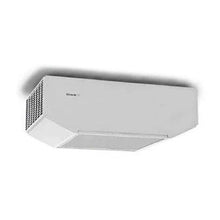
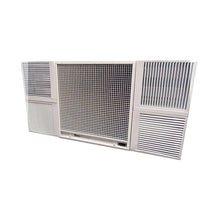
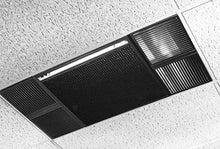
Systems designed to handle these combined threats, like our range of Smoke and VOC Purifiers, are the ideal solution for a game room environment. The chalk dust in your room makes one part of the system especially important. Learn more in our guide: The Importance of a Pre-Filter in Your Air Purifier.
Conclusion
Creating an exceptional billiards room is an investment in your home and your enjoyment. The final, perfecting touch is an investment in the air itself. By recognizing the unique triple threat of pollutants—chalk dust, social odors, and general indoor contaminants—you can see why a specialized solution is necessary. The best air purifier for your billiards room will always be a powerful, correctly-sized system that combines robust pre-filtration, True HEPA particle capture, and heavy-duty activated carbon for odor elimination. Clearing the air is the ultimate move to ensure every game is played in a clean, healthy, and invigorating environment.
Create the ultimate game room. Find the perfect air purifier for your space.
Your Game Room Air Quality Questions Answered
Is chalk dust actually bad for you?
While casual exposure is generally not a major concern for healthy individuals, fine mineral dusts like those found in billiards chalk can act as respiratory irritants. For people with pre-existing conditions like asthma or allergies, or for those who spend many hours a week in a dusty room, minimizing inhalation is a wise precaution for long-term respiratory comfort.
Can I just use a regular home air purifier for my billiards room?
A standard home unit will likely struggle and underperform. Most consumer-grade purifiers lack a pre-filter robust enough to handle heavy chalk dust, a carbon filter large enough to manage potential smoke and other game room odors, and the high CFM rating needed to effectively clean the air in a large, active social space.
Where is the best place to put the air purifier in the room?
For optimal performance, the unit should be placed in a location where it can create a whole-room circulatory pattern. This usually means away from corners and walls, in a more central part of the room where it won’t obstruct movement. The goal is to avoid "dead spots" where air can stagnate.
What about the noise? I don't want a loud machine ruining the atmosphere.
This is a valid and important concern. The key to quiet operation is selecting a unit that is more powerful than your minimum requirement. An air purifier rated for 600 CFM running at 50% power is significantly quieter and more pleasant than a 300 CFM unit running at 100% to achieve the same airflow. Oversizing your unit is the best strategy for maintaining a quiet, comfortable environment.