Don't Let Smoke Ruin Your Retreat: The Professional's Guide to Commercial Smoke Eaters for Basements

By the Experts at Commercial Air Purifiers | Published: October 29, 2025
The basement holds a unique potential in any home. It’s a blank canvas, a space ready to be transformed into the ultimate retreat: a sophisticated home bar, a high-stakes poker room, a comfortable billiards hall, or a private cigar lounge. But this subterranean space, for all its promise, comes with a critical flaw. As a below-grade environment, it is a natural trap for air pollutants, and there is no pollutant more invasive or difficult to manage in a basement than tobacco smoke.
Many homeowners attempt to solve this problem with a standard residential air purifier, only to find it completely overwhelmed. The reality is that the unique atmospheric challenges of a basement demand a more powerful and robust solution. As air quality engineers, we've helped countless clients transform problematic basements into pristine entertainment spaces. The secret isn't a bigger residential unit; it's a different class of machine altogether. This is your definitive guide to understanding why a commercial-grade smoke eater is the professional’s choice for mastering air quality in a basement.
The Basement Problem: A Perfect Storm for Poor Air Quality
To understand the solution, we must first appreciate why a basement is such a uniquely challenging environment for air quality management, especially when smoke is introduced. It’s a space that presents a perfect storm of three distinct atmospheric problems.
1. Chronic Lack of Ventilation: Basements are, by design, largely sealed off from the outdoors. With few, if any, operable windows and limited air exchange, pollutants have nowhere to go. When you introduce a high-volume pollutant like tobacco smoke, its concentration can build to extreme levels with astonishing speed, creating a thick, unpleasant, and unhealthy environment.
2. The "Stack Effect" Threat to Your Entire Home: This is a building science principle that every homeowner should understand. In colder weather (a familiar reality here in Minneapolis), the warm air in your home naturally rises. As this air escapes through the upper levels, it creates a subtle, continuous vacuum that actively pulls air up from the lowest point of the house—the basement. As the U.S. Department of Energy explains, this "stack effect" can be a major source of air movement in a home. This means that the smoke, odor, and toxic chemicals from your basement lounge are not staying downstairs; they are being systematically drawn up and distributed throughout your entire house.
3. The Competing Pollutants of a Below-Grade Space: Basements are inherently prone to higher humidity and dampness. As the U.S. Environmental Protection Agency (EPA) frequently highlights, this moisture can lead to the growth of mold and mildew, which release their own set of pollutants called Microbial Volatile Organic Compounds (MVOCs). These are the source of that classic "musty" basement smell. When the thousands of chemicals from tobacco smoke combine with these underlying musty odors, they create a uniquely stubborn and unpleasant smell that is incredibly difficult to remove.
Moving Beyond Residential Units: The Commercial Standard
Given these challenges, it becomes clear why a standard air purifier is destined to fail. The term "commercial smoke eater" doesn't just refer to a brand; it refers to a set of engineering specifications designed to handle severe pollutant loads in difficult environments. Here’s what sets a commercial-grade unit apart.
Unmatched Airflow (CFM)
The foundational difference is raw power. A commercial smoke eater is built with a heavy-duty motor and fan designed to move a massive volume of air, measured in CFM (Cubic Feet per Minute). This power is necessary to achieve the extremely high rate of Air Changes per Hour (ACH) required to control smoke in real-time. For a basement smoking lounge, you need a system capable of achieving 10 to 15 ACH. A residential unit is typically designed for only 2-4 ACH in a bedroom, making it mathematically incapable of keeping up.
Massive Filtration Capacity (The Carbon Load)
This is the key to total odor elimination. While a residential purifier might have a filter with a few ounces of activated carbon, a true commercial smoke eater’s carbon filter is measured in pounds. A premium unit will contain 15, 20, or even 25 pounds of virgin activated carbon. This enormous mass is necessary to adsorb the sheer volume of VOCs from tobacco smoke and the underlying MVOCs from mustiness, without becoming saturated and ineffective in a short time.
Built for Continuous Duty (Durability)
Commercial units are designed to be workhorses. They feature durable, inert steel housings that won't absorb odors or off-gas like plastic. Their industrial-grade motors are engineered for continuous, 24/7 operation for years on end. This is a "set it and forget it" piece of infrastructure, not a fragile home appliance.
The Technology Required for a Smoky Basement
A true commercial smoke eater employs a multi-stage defense system, with each stage targeting a specific component of the complex air quality problem in your basement.
Stage 1: The HEPA Filter for Hazardous Particles
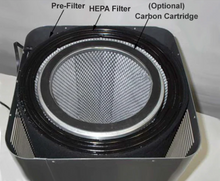
The visible haze of smoke and the invisible fine particles of tar and ash are the primary health risk. The CDC confirms that these particles are laden with carcinogens. A commercial smoke eater uses a True HEPA filter to capture these threats. Certified to remove 99.97% of airborne particles down to 0.3 microns, the HEPA filter is a physical barrier that traps the solid and liquid aerosol components of smoke, clearing the air and protecting your lungs.
Stage 2: The Carbon Filter for Complex Odors
This is the odor-destroying engine of the system. As established, the massive activated carbon bed is what sets a commercial unit apart. Its vast internal surface area adsorbs and neutralizes the thousands of odorous VOCs from the tobacco smoke. Critically, it also performs double duty, capturing the musty-smelling MVOCs from any underlying dampness, thus solving both of the basement's primary odor problems simultaneously.
Optional Stages for an Elite System
Some advanced commercial systems may include additional stages, such as a robust pre-filter to capture larger dust particles and protect the main filters, or a UV-C sterilization stage to neutralize biological contaminants like mold spores and bacteria, providing an even greater level of air sanitation.
Strategic Implementation for Maximum Impact
Selecting the right machine is half the battle; deploying it correctly is the other half.
Calculating Your Basement's Airflow Needs
First, you must accurately calculate your power requirement. Do not guess.
-
Calculate the Total Volume of Your Basement: Length (ft) x Width (ft) x Height (ft) = Volume (cubic feet). For L-shaped basements, calculate the areas of the two rectangles separately and add them together.
-
Determine Your Required CFM: (Room Volume x Target ACH) / 60 minutes = Required CFM. For a smoking basement, use 15 ACH for your calculation.
Example: For a large, open basement that is 40 ft long by 25 ft wide with an 8 ft ceiling:
-
Volume = 40 x 25 x 8 = 8,000 cubic feet.
-
Required CFM = (8,000 x 15 ACH) / 60 = 2,000 CFM.
This calculation immediately shows why a standard 250 CFM residential unit would be completely ineffective. This large space requires one or more commercial units with a combined CFM rating of 2,000.
Placement and Airflow Dynamics
In a large basement, a single unit should be placed in a central location to encourage a large, circular airflow pattern. For very large or irregularly shaped basements, using two or more smaller commercial units placed at opposite ends of the space is often more effective than one massive unit, as it creates a more comprehensive and balanced circulation.
From Problem Space to Premium Space: Your Action Plan
Transforming your basement into a clean-air retreat is an achievable project when you follow a professional approach.
-
First, Address the Source of Moisture: Before installing any air purification system, it is critical to address any underlying water seepage, condensation, or humidity issues. A dehumidifier may be a necessary first step.
-
Calculate Your Airflow Requirement: Do the math. Be realistic about the high CFM number your basement will likely require and select your equipment to meet or exceed that number.
-
Select a True Commercial-Grade Unit: Don't be swayed by marketing terms like "pro" or "plus." Look at the specifications: a high CFM rating, a True HEPA filter, and a carbon filter weighing at least 15 lbs.
-
Plan for Strategic Placement: Before you buy, map out the best location for your unit(s) to ensure you are creating a complete, whole-room circulation pattern.
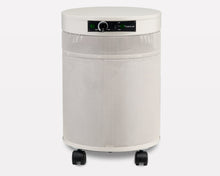
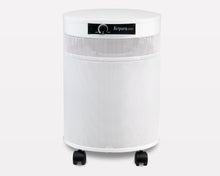
These demanding environments require a specific class of machine. Explore our collection of Commercial Smoke Eaters to see the technology in action. To understand the key differences in build and performance, read our guide: "The Difference Between Commercial and Residential Air Purifiers."
Conclusion
Your basement holds the potential to be the best room in your house, but its inherent environmental challenges require a serious, purpose-built solution. Because of its poor ventilation, its susceptibility to the "stack effect," and its tendency toward mustiness, a standard air purifier is simply outmatched. A commercial-grade smoke eater—defined by its immense power (CFM), massive filtration capacity, and rugged durability—is the professional's choice. It is the only tool engineered to overcome the perfect storm of basement air quality issues, transforming a potential problem space into a pristine and welcoming retreat for you and your guests.
Ready to transform your basement? Explore our range of commercial-grade smoke eaters.
Your Basement Smoke Eater Questions Answered
Are commercial smoke eaters very loud?
Because they are more powerful, a commercial unit at its maximum speed will be louder than a small residential unit. However, the professional strategy is to oversize your unit. A commercial smoke eater rated for 1000 CFM running at a quiet 50% capacity is far more effective and pleasant than a residential unit rated for 500 CFM screaming at 100% capacity.
Should I use an exhaust fan to vent the smoke outside instead?
An exhaust system is another excellent tool, particularly for containment, as it creates negative pressure. However, it does not clean the air inside the room where you and your guests are. For maximum comfort and health, a commercial smoke eater is still needed to continuously scrub the air within the basement. The two systems can work together for an ultimate solution.
Are commercial smoke eaters difficult to install?
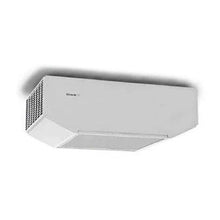
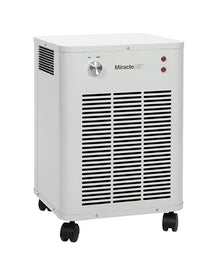
Most commercial smoke eaters are standalone, portable units that are as simple to install as a home appliance: you just place them and plug them in. Some models are designed to be mounted to a ceiling, which may require professional installation, but offers the benefit of being up and out of the way.
How does a smoke eater also help with that "musty basement" smell?
The technology to remove both smells is the same: activated carbon. The Microbial Volatile Organic Compounds (MVOCs) that cause musty and moldy odors are gaseous pollutants, just like the VOCs in tobacco smoke. The massive activated carbon filter in a commercial smoke eater is extremely effective at adsorbing both types of odor molecules, solving two problems at once.
Ready to improve your air quality? Explore our Smoke Removal collection, or contact our team for a recommendation tailored to your space.