Protecting Their First Breaths: Why Your Baby Needs a Professional-Grade Air Purifier

By the Team at Commercial Air Purifiers
There is a powerful instinct that kicks in the moment you find out you are expecting. You become a researcher, a safety inspector, and a guardian all at once. You spend hours researching the safest car seat, the most non-toxic crib mattress, and the organic cotton onesies. You create a sanctuary where your child can sleep and grow in safety.
But there is one element of the nursery that often gets overlooked until the last minute, or worse, treated as an afterthought: the air itself.
We often assume that because the nursery is freshly painted and filled with new furniture, it is "clean." In reality, the modern nursery can be a hotbed of invisible pollutants, from the off-gassing of new synthetic materials to the allergens that drift in from the rest of the house.
At Commercial Air Purifiers, we normally equip hospitals, labs, and industrial sites. But we are also parents. We know that when it comes to your child, "good enough" isn't acceptable. While it might seem counterintuitive to put a "commercial-grade" machine in a baby’s room, the principles of industrial engineering—reliability, sealed systems, and massive filtration capacity—are exactly what a developing immune system needs. Here is why an air purifier is essential for your baby, and why you should look beyond the cute plastic appliances sold in baby boutiques.
The Vulnerability of Little Lungs
Why is air quality so critical for infants? It comes down to biology.
According to the World Health Organization (WHO), infants and young children breathe more rapidly than adults. While you might take 12 to 20 breaths a minute, a newborn can take 40 to 60. Relative to their body weight, they inhale a significantly higher volume of air—and consequently, a higher dose of whatever pollutants are in that air.
Furthermore, their respiratory systems and immune defenses are still under construction. The lungs continue to develop long after birth, making them uniquely susceptible to inflammation and damage from particulate matter (PM2.5) and chemical fumes. The EPA explicitly states that children are at greater risk from indoor air pollution because their bodies are still growing.
The "New Baby Smell" Warning
That distinct smell of a new nursery—fresh paint, new carpet, the plastic wrapping on the changing pad—is actually a warning sign. These items release Volatile Organic Compounds (VOCs). This process is called off-gassing.
Formaldehyde, benzene, and toluene are common byproducts of manufacturing glues and finishes used in cribs and dressers. If you place a baby in a room with the door closed for a nap, you are essentially trapping them in a chamber with these accumulating gases.
This is where standard "baby" air purifiers fail. Most are designed to catch dust (particulates) but have no capability to stop gas. To protect a baby from chemical off-gassing, you need serious filtration technology that goes beyond a simple paper filter.
The "Overkill" Advantage: Silence Through Power
When parents look for a nursery air purifier, their number one requirement is usually "Silence." They don't want a jet engine waking up the baby.
This leads them to buy small, low-powered residential units that claim to be "whisper quiet." The problem? To get any air movement out of those small fans, you have to run them on "High," which creates a high-pitched whine. If you run them on "Low" to keep them quiet, they move almost no air, rendering them useless.
The Commercial Engineering Solution:
At Commercial Air Purifiers, we advocate for "Overkill."
-
The Physics: A large commercial motor with a big fan blade can move a massive amount of air while spinning slowly.
-
The Benefit: If you buy a unit rated for 800 CFM (Cubic Feet per Minute) and run it on its lowest setting, it might move 200 CFM (plenty for a nursery) while being barely audible.
By oversizing the unit, you get the cleaning power you need without the noise penalty. You get a gentle, low-frequency "pink noise" hum that actually acts as a sleep aid, masking sudden sounds like a dog barking or a doorbell ringing.
Technologies That Are Safe (and Unsafe) for Babies
Not all air purifiers are safe for nurseries. The market is flooded with gimmicks that can actually harm a developing respiratory system.
1. True HEPA (The Gold Standard)
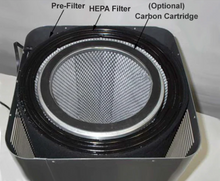
For particulates—dust, pollen, pet dander, and viruses—True HEPA is the only standard you should trust. It captures 99.97% of particles at 0.3 microns.
-
Why it's safe: It is purely mechanical. It traps the dirt. It adds nothing to the air.
2. Activated Carbon (The Chemical Shield)
To handle the VOCs from the new furniture and the odors from the diaper pail, you need Activated Carbon.
-
Why it's safe: It works by adsorption. It grabs gas molecules and holds them.
-
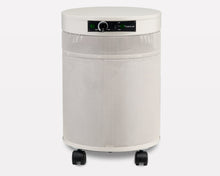
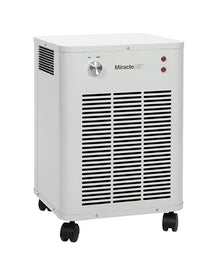
The Commercial Difference: Commercial units use steel housings and heavy carbon beds. Residential units are often made of plastic. Ironically, the plastic housing of a cheap air purifier can itself off-gas when the motor gets warm. A powder-coated steel unit is inert and odorless.
3. Ionizers and Ozone Generators (The Danger Zone)
Never use an "ionic" air purifier or an ozone generator in a nursery.
-
The Risk: These devices charge the air to drop particles or destroy odors chemically. A common byproduct is Ozone. The EPA warns that even low levels of ozone can cause chest pain, coughing, and throat irritation. It is a known asthma trigger.
-
Our Stance: We strictly recommend mechanical filtration (HEPA + Carbon) for nurseries. Zero ozone. Zero risk.
Sizing the Nursery: The CFM Rule
How much power do you need? Even though a nursery is usually a small room (e.g., 10x12 feet), you want high air turnover to keep the viral load low and the VOCs flushed out.
We recommend 6 to 8 Air Changes Per Hour (ACH) for a nursery. This ensures the air is completely scrubbed every 7 to 10 minutes.
The Calculation:
$\text{Room Volume (L x W x H)} \times \text{Desired ACH} / 60 = \text{Required CFM}$
Example:
Nursery is 10’ x 12’ with 8’ ceilings = 960 cubic feet.
Targeting 8 ACH.
$(960 \times 8) / 60 = 128 \text{ CFM}$.
You need a unit that delivers at least 128 CFM.
-
The Trap: A small unit might claim 130 CFM, but that is at maximum speed (noisy).
-
The Fix: Buy a unit rated for 300+ CFM. Run it on "Low." You will get your 128 CFM in total silence.
Don't Guess. Use our CFM Calculator. Plug in your nursery's dimensions to see exactly what is required to keep the air safe.
Features to Look For in a Nursery Unit
When shopping for the ultimate baby shower gift or upgrading your own home, look for these specific "commercial-grade" features:
-
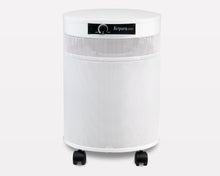
Steel Housing: Avoids plastic off-gassing and is durable enough to survive a toddler ramming it with a toy truck later in life.
-
Child Lock: Essential for when the baby becomes a toddler and wants to push buttons.
-
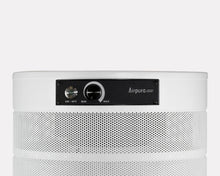
Lights-Out Mode: You do not want a bright blue LED power light keeping the baby awake. Professional units often have discrete displays or "sleep modes" that darken the panel.
-
Heavy Filter Media: If the filter feels like a piece of paper, it won't last. Look for filters that have weight and density.
Frequently Asked Questions
Q: Will an air purifier make the room "too clean" and stop my baby's immune system from developing?
A: This is a common misunderstanding of the "Hygiene Hypothesis." While exposure to some microbes is good, exposure to pollution (traffic exhaust, chemical fumes, mold spores) is never good. Your goal is to remove the toxins that cause inflammation, not to sterilize the child. Protecting their lungs from PM2.5 allows them to grow strong without the burden of respiratory distress.
Q: Where should I place the unit in the nursery?
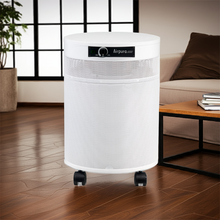
A: Keep it at least 3 to 5 feet away from the crib. You want the baby to breathe the clean air circulating in the room, but you do not want a draft blowing directly on their face, as this can dry out their mucous membranes.
Q: Does it help with sleep?
A: Yes. Beyond the air quality benefits (less congestion = better sleep), the "white noise" aspect of a high-quality fan is widely recommended by sleep consultants to help babies link sleep cycles and ignore household noise.
Conclusion: A Foundation of Health
You invest in the best car seat to protect them on the road. You invest in the best food to protect their growth. Investing in the best air quality is the third pillar of safety.
A baby's room should be a safe haven. By ignoring the plastic toys sold as "air purifiers" and opting for a unit engineered with commercial standards—steel, HEPA, and high-torque motors—you are ensuring that every one of those 40 breaths a minute is as pure as possible.
Don't guess with your baby's health. Visit our CFM Calculator to size your nursery correctly. Then, browse our selection of Residential & Commercial Air Purifiers to find a unit that offers the safety, silence, and reliability your family deserves.
References:
-
World Health Organization (WHO). "Air pollution and child health: prescribing clean air."
-
U.S. Environmental Protection Agency (EPA). "Indoor Air Quality (IAQ) and Children's Health."
-
American Academy of Pediatrics (AAP). "Ambient Air Pollution: Health Hazards to Children."