The Haze Fighter: How to Choose the Best Air Purifier for Cigar Smoke

By the Team at Commercial Air Purifiers
There is a ritual to smoking a cigar. It involves time, appreciation, and relaxation. But there is a dark side to that ritual that every aficionado and lounge owner knows all too well: the hangover effect of the room itself.
Long after the ash has been dumped and the guests have left, the air remains heavy. That distinct "blue haze" hovers near the ceiling. The smell of cold, stale tobacco settles into the furniture, the curtains, and the carpet. Worse, if you are a lounge owner, your customers start complaining that their eyes sting or that their clothes smell like an ashtray before they’ve even lit up.
The frustration is palpable because most people try to solve this problem with tools that are simply too weak. They buy a sleek, silent air purifier from a department store, expecting it to clear the air of a robust Maduro. Within a week, the unit is clogged, the plastic housing smells permanently of smoke, and the haze hasn't budged.
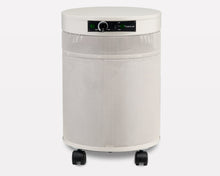
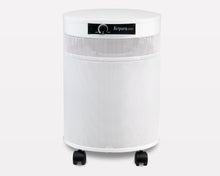
At Commercial Air Purifiers, we deal with the toughest air quality challenges on earth, and cigar smoke is near the top of that list. It is dense, sticky, and chemically complex. To clear the air effectively, you cannot rely on "good enough." You need "Overkill" engineering. You need heavy steel, massive carbon beds, and industrial airflow. Here is why your current setup is failing and how to choose the best air purifier for cigar smoke.
The Anatomy of the Enemy: Why Cigar Smoke is Different
To defeat cigar smoke, you must understand what it actually is. It is not just "dust." It is a complex aerosol consisting of two distinct threats, both of which require different filtration technologies.
-
The Visible Particulate (PM2.5): This is the smoke you see—the blue/grey cloud. It consists of fine particles (tar, ash, combustion byproducts) that are 2.5 microns or smaller. These particles are sticky. They coat surfaces and penetrate deep into the lungs.
-
The Invisible Gas (VOCs): This is the smoke you smell. Volatile Organic Compounds (VOCs) like benzene, formaldehyde, and hundreds of other chemicals are released during combustion. These are gases, not solids.
According to the Centers for Disease Control and Prevention (CDC), secondhand tobacco smoke contains more than 7,000 chemicals. From an engineering standpoint, this presents a unique challenge: A filter that catches the visible smoke (PM2.5) will let the invisible gases pass right through. Conversely, a filter that catches the gas might get clogged by the tar.
To effectively purify the air in a cigar environment, you need a system designed to handle both phases of the pollutant simultaneously, and in high volume.
The "Residential Trap": Why Home Units Fail
We often see lounge owners or home enthusiasts try to save money by purchasing high-end residential air purifiers. On paper, they look great—"HEPA filtration," "Carbon filter included," "Quiet operation."
In a cigar lounge, however, these units are practically disposable.
1. The Carbon Deficit This is the single biggest reason for failure. Residential units typically use a "carbon pre-filter"—a thin sheet of foam impregnated with a dusting of carbon. It might weigh a few ounces.
-
The Physics: Activated Carbon works by adsorption (trapping gas molecules in pores). Once the pores are full, the filter stops working.
-
The Reality: A single cigar can saturate a residential carbon sheet in hours. Once saturated, the unit stops removing odors and can even start off-gassing them back into the room.
-
The Commercial Solution: You need weight. To handle cigar smoke, you need deep-bed canisters containing 15 to 30 pounds of Activated Carbon. This provides the surface area necessary to absorb odors for months, not days.
2. The Plastic Problem Residential units are made of plastic. Cigar smoke contains tar.
-
The Reaction: Tar is sticky and acidic. It bonds to plastic surfaces. Over time, the plastic housing of the air purifier itself absorbs the smoke odor. You end up with a machine that smells like an ashtray even when it's turned off.
-
The Commercial Solution: We use powder-coated steel or stainless steel housings. Metal does not absorb odors. You can wipe it down with degreaser, and it stays pristine.
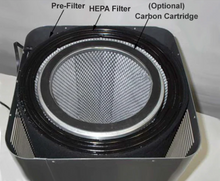
3. The Tar Clog Tar is the enemy of HEPA filters. If wet, sticky tar hits a HEPA filter directly, it creates an impermeable seal, ruining the filter instantly. Residential units rarely have adequate pre-filtration to stop this. Commercial "Smoke Eaters" use specialized Tar Barriers or oil-mist pre-filters to catch the sticky stuff before it ruins the main filters.
The Science of Airflow: You Need More Power Than You Think
In a standard office, you might want 4 Air Changes Per Hour (ACH). In a cigar lounge, that is nowhere near enough.
ASHRAE (American Society of Heating, Refrigerating and Air-Conditioning Engineers) standards for smoking lounges are incredibly high because the pollutant generation rate is continuous. As long as a cigar is lit, it is pumping contaminants into the room.
To keep the smoke from settling (the "blue haze" effect), you need to cycle the air faster than the smoke is being generated.
-
Minimum Recommendation: 10 to 12 Air Changes Per Hour (ACH).
-
Ideal "Overkill" Target: 15 to 20 Air Changes Per Hour.
Understanding CFM (Cubic Feet per Minute) This is the only metric that matters when sizing a unit. Do not look at "Square Footage" ratings on the box, which assume 8-foot ceilings and no smoke. You must calculate the volume of your room and the speed of filtration.
The Calculation:
Example: You have a "Man Cave" or small lounge area that is 20’ x 20’ with 10’ ceilings. Volume = 4,000 cubic feet. You want 15 Air Changes Per Hour (to ensure no haze). .
You need 1,000 CFM of filtration power. Most premium residential units top out at 300-400 CFM. You would need three of them running on maximum volume to do the job of one commercial unit running quietly.
Don't Guess. Use our CFM Calculator. Plug in your room dimensions, and it will tell you exactly how much horsepower you need to keep the air clear.
Technologies That Work (And Those That Don't)
When shopping for the best air purifier for cigar smoke, you will encounter various buzzwords. Here is the truth about what works in a smoking environment.
1. HEPA (High-Efficiency Particulate Air) - ESSENTIAL
You need True HEPA to capture the visible smoke particles (PM2.5). This clears the "haze."
-
Warning: Ensure the unit has a pre-filter to protect the HEPA from tar.
2. Deep-Bed Activated Carbon - ESSENTIAL
This is non-negotiable for odor. Look for granular carbon, not impregnated foam. The heavier the unit, the better it will perform. Some commercial units add potassium permanganate to the carbon to specifically target oxidizers in smoke.
3. Ozone Generators - AVOID
You will see "Ozone Generators" marketed heavily to cigar smokers because they destroy odors instantly.
-
The Danger: Ozone is a lung irritant. The EPA explicitly advises against using ozone generators in occupied spaces. Using ozone in a room where people are already smoking (which irritates the lungs) is a recipe for respiratory distress. Never use ozone while people are present.
4. Electronic Air Cleaners (Electrostatic) - USE WITH CAUTION
These use electrically charged plates to trap particles like a magnet.
-
Pros: No filters to buy; you wash the plates (great for removing tar).
-
Cons: As the plates get dirty, efficiency drops to near zero. You must clean them frequently (sometimes weekly) in a dishwasher. If you hate maintenance, stick to media filters (HEPA/Carbon).
Installation Strategy: Creating an Airflow Pattern
Buying the right unit is half the battle. Placing it correctly is the other half. Smoke is visible, so you can actually see if your airflow pattern is working.
The Goal: Create a "river" of air that moves smoke away from the occupants and towards the machine.
-
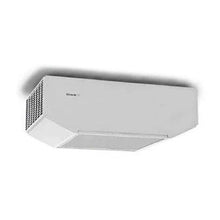
Ceiling Mount (Flush Mount): This is the gold standard for cigar lounges. Heat and smoke rise. By mounting a commercial "Smoke Eater" flush to the ceiling in the center of the room, you capture the smoke where it naturally wants to go. This creates a toroidal (donut-shaped) airflow pattern that constantly scrubs the upper layer of air.
-
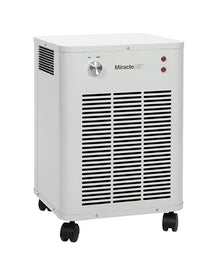
Floor/Table Placement: If you cannot mount to the ceiling, place the unit on a table or stand. Do not put it on the floor. Smoke rises. If the intake is on the floor, the smoke has to cool down and fall before it gets filtered, meaning it stays in the room longer. Elevate the intake to head height if possible.
-
The "Dead Zone" Check: Ensure you don't have stagnant corners. In a large lounge, you are often better off with two medium-sized units on opposite walls creating a circular airflow than one giant unit in the corner.
Frequently Asked Questions
Q: How long will the filters last in a cigar lounge? A: This depends entirely on the volume of smoking.
-
Heavy Lounge (Constant use): Carbon filters may need changing every 3-4 months. Pre-filters/Tar barriers should be changed or washed monthly.
-
Home User (1-2 cigars a day): Carbon might last 6-12 months.
-
Pro Tip: Trust your nose. When you walk into the room the next morning and smell stale tobacco, the carbon is saturated.
Q: Is it better to exhaust the air outside or filter it? A: Exhausting air (ventilation) is always the most effective way to remove smoke, but it is expensive. If you suck 1,000 CFM of air out of the room, you have to pay to heat or cool 1,000 CFM of makeup air coming back in. Recirculating air purifiers ("Smoke Eaters") allow you to clean the air without losing your climate control (AC/Heat), saving you massive amounts on energy bills.
Q: Why does my unit smell like sour vinegar? A: This is a sign that the carbon filter is saturated and is starting to "desorb" or release captured chemicals, or that the tar has turned rancid on the pre-filter. It is time for a filter change immediately.
Conclusion: Don't Compromise the Experience
The enjoyment of a cigar is about the flavor, the company, and the atmosphere. A room choked with blue haze and the acrid smell of stale ash ruins all three.
For cigar smokers, "good enough" air filtration simply isn't enough. The physics of smoke requires heavy carbon, protected HEPA, and industrial-strength airflow. By choosing a commercial-grade unit with a steel body and deep-bed filtration, you protect your property, your health, and the quality of your leisure time.
Ready to clear the air? Stop guessing at the requirements. Use our CFM Calculator to determine exactly how much power your lounge needs. Then, browse our collection of Commercial Smoke Eaters to find the heavy-duty solution that can handle your finest cigars.
References:
-
Centers for Disease Control and Prevention (CDC). "Secondhand Smoke (SHS) Facts."
-
ASHRAE. "Standard 62.1: Ventilation for Acceptable Indoor Air Quality."
-
U.S. Environmental Protection Agency (EPA). "Residential Air Cleaners: A Technical Summary."