The Heavy Haze: Why You Need an Industrial Solution for Cigarette Smoke

By the Team at Commercial Air Purifiers
Cigarette smoke is, without a doubt, the ultimate stress test for any air purification system. It is relentless, pervasive, and incredibly complex. Unlike dust, which simply settles on the floor, cigarette smoke is an aggressive cocktail of sticky tars, fine ash particulates, and volatile gases that permeate every porous surface in a room.
If you are a smoker, or if you live with one, you know the struggle. You buy a "top-rated" air purifier from a department store, expecting it to clear the air. For the first few days, it seems to work. But by week two, the room smells stale again. By week four, the unit itself—the very machine supposed to clean the air—starts emitting a sour, tar-like odor.
The frustration is real, but so is the physics behind the failure. Standard residential air purifiers are simply not engineered to handle the chemical density of combustion byproducts. They are bringing a knife to a gunfight.
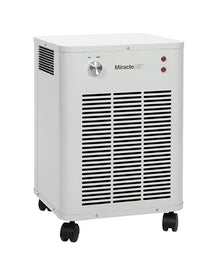
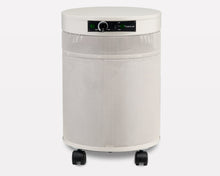
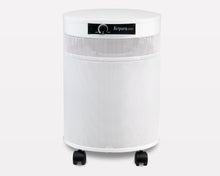
At Commercial Air Purifiers, we approach cigarette smoke with "Overkill" engineering. We know that to truly scrub a room of tobacco smoke, you cannot rely on plastic fans and paper-thin filters. You need heavy steel, industrial torque, and massive beds of activated carbon. Here is the unvarnished truth about how to choose the best air purifier for cigarette smoke and why your previous attempts have likely failed.
The Anatomy of the Enemy: What is Cigarette Smoke?
To defeat the smoke, you have to understand what it is made of. It is not a single substance; it is a three-headed monster.
-
Particulates (Ash and Visible Smoke): This is the blue/grey cloud you see. It consists of particles smaller than 2.5 microns (PM2.5). These particles are hazardous because they are small enough to bypass your nose’s natural defenses and lodge deep in the lungs.
-
Volatile Organic Compounds (VOCs): This is the invisible gas. Burning tobacco releases benzene, formaldehyde, and hundreds of other chemicals. These gases are what cause the lingering odor and the "stale" smell that sticks to clothing.
-
Tar: This is the machine-killer. Tar is a sticky, resinous substance that rides along with the smoke. When it cools, it hardens.
According to the Centers for Disease Control and Prevention (CDC), secondhand smoke contains more than 7,000 chemicals, hundreds of which are toxic. From an engineering perspective, this presents a unique challenge: You need a filter fine enough to catch the microscopic ash, absorbent enough to trap the gas, and tough enough to survive the tar.
Why Residential Units Fail the Smoke Test
Most people start their search on Amazon or at a big-box store. They look for words like "HEPA" and "Carbon Filter." While those technologies are correct, the implementation in residential units is woefully inadequate for smoke.
1. The Carbon Deficit
This is where 90% of units fail. Residential air purifiers typically use a "Carbon Pre-Filter." If you look closely, it is a thin, black foam sheet or a mesh with a sprinkling of carbon dust.
-
The Problem: Activated Carbon works by adsorption (trapping gas in pores). A few ounces of carbon will become saturated with cigarette smoke in a matter of days. Once saturated, it stops working entirely.
-
The Commercial Reality: To effectively remove the smell of daily smoking, you need pounds of carbon, not ounces. You need deep-bed canisters that provide enough surface area to absorb VOCs for months.
2. The Plastic Housing Trap
Residential units are made of plastic.
-
The Problem: Plastic is porous. Tar is sticky and acidic. Over time, the tar from the smoke bonds to the plastic housing of the air purifier. The machine itself becomes impregnated with the smell of old smoke. No amount of filter changing will fix it; the unit is ruined.
-
The Commercial Reality: We use powder-coated steel or stainless steel. Metal is non-porous. Tar sits on the surface and can be wiped off with a degreaser. A steel unit can last for decades in a smoking environment without retaining odors.
3. The Motor Burnout
Tar doesn't just stick to the outside; it gets sucked inside. In cheaper units with open-frame motors, the tar coats the copper windings, causing heat buildup and eventual motor failure. Commercial units use sealed or industrial-rated motors designed to withstand harsh environments.
The Science of "Overkill": The Technologies You Need
If you are serious about removing cigarette smoke—whether in a home, a designated smoking room, or a commercial lounge—you need a specific stack of technologies.
1. The Tar Barrier (Pre-Filtration)
You cannot let sticky tar hit your expensive main filters. If tar hits a HEPA filter, it acts like glue, sealing the filter shut and killing airflow instantly.
-
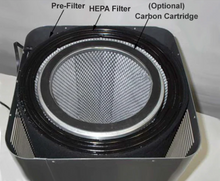
The Solution: Commercial smoke eaters use substantial pre-filters (often metal mesh or oil-mist filters) designed specifically to condense and trap the sticky tars before they reach the finer media.
2. Deep-Bed Activated Carbon (For Odor)
This is the heavy lifting. To stop the smell, you need Granular Activated Carbon.
-
The Metric: Look for the weight. If the manufacturer doesn't list the weight of the carbon, assume it is negligible. For a heavy smoker, we recommend units with at least 15 to 20 pounds of carbon.
-
The Dwell Time: Commercial units are engineered to push air through this thick bed of carbon at the right speed to allow for adsorption.
3. True HEPA (For the Cloud)
To remove the visible haze and the dangerous PM2.5 particles, you need True HEPA filtration (99.97% efficiency at 0.3 microns).
-
The Integration: In a proper commercial setup, the HEPA filter is placed after the pre-filter and carbon, ensuring it is scrubbing clean, dry air rather than getting clogged with tar.
The Physics of Airflow: The CFM Rule
Cigarette smoke expands rapidly. It moves with thermal energy (heat rises). To catch it, you have to be fast.
A gentle breeze from a residential fan won't cut it. You need CFM (Cubic Feet per Minute).
The Air Change Calculation
For a smoking environment, standard ventilation rates are insufficient. ASHRAE (American Society of Heating, Refrigerating and Air-Conditioning Engineers) guidelines suggest much higher ventilation rates for smoking lounges.
-
Non-Smoking Room: 4-6 Air Changes Per Hour (ACH).
-
Smoking Room: 10-20 Air Changes Per Hour (ACH).
The Calculation:
$\text{Room Volume (L x W x H)} \times \text{Desired ACH} / 60 = \text{Required CFM}$
Example:
You have a "smoking den" that is 12’ x 15’ with 8’ ceilings.
Volume = 1,440 cubic feet.
You want 15 Air Changes Per Hour to prevent the smoke from drifting into the rest of the house.
$(1,440 \times 15) / 60 = 360 \text{ CFM}$.
You need a unit that delivers a minimum of 360 CFM.
-
Critical Note: Most residential units claim "360 CFM" but only achieve that on "Turbo" mode, which sounds like a jet engine. A commercial unit rated for 800 CFM can run on "Low" to give you that 360 CFM in near silence.
Don't Guess. Use our CFM Calculator. Input your room dimensions to see exactly how much power is required to keep the air clear.
Installation Strategy: Controlling the Plume
Buying the best air purifier for cigarette smoke is only step one. Step two is putting it in the right place. Smoke follows heat. It rises.
1. Ceiling Mount is King
In commercial settings (bars, bingo halls, lounges), we almost always mount "Smoke Eaters" flush to the ceiling in the center of the room. This creates a toroidal (donut-shaped) airflow pattern. The unit sucks the rising smoke up (where it wants to go anyway), scrubs it, and pushes clean air out to the walls.
2. Tabletop/Floor Placement
If you are at home and cannot mount a unit to the ceiling, place the unit on a table or stand, ideally at chest/head height.
-
Avoid the Floor: If you put the purifier on the floor, the smoke has to travel all the way up to the ceiling, cool down, and fall back down to the floor before the machine can catch it. By then, it has already spread throughout the room.
Myths and Dangers
The Ozone Myth
You will often see "Ozone Generators" marketed to smokers because ozone destroys odors instantly.
-
The Warning: Ozone is a lung irritant. Using an ozone generator in a room while you are smoking is dangerous. Your lungs are already irritated by the smoke; adding ozone (a chemical oxidizer) creates a toxic environment. The EPA explicitly warns against using ozone generators in occupied spaces. Stick to mechanical filtration (Carbon/HEPA).
The "Ionic" Gadget
Small, silent "ionic" towers are popular because they have no fans.
-
The Reality: They have zero airflow. They rely on particles drifting past them. They are useless against the volume of smoke produced by a cigarette.
Frequently Asked Questions
Q: Can an air purifier help with "Thirdhand Smoke"?
A: "Thirdhand smoke" is the residue that settles on walls and furniture. An air purifier helps prevent thirdhand smoke by capturing the particles before they settle. However, it cannot clean the residue that is already there. If your walls are yellow, you need to wash and paint them. The air purifier will stop them from getting yellow again.
Q: Does it help if my neighbor smokes?
A: Yes. If smoke is seeping into your apartment from a neighbor, you need to create a "positive pressure" environment if possible, but more likely, you need a heavy carbon unit running 24/7 in your home to adsorb the VOCs as they enter. Placing the unit near the source of the leak (vent or door) is most effective.
Q: How often do I change filters if I smoke a pack a day indoors?
A:
-
Pre-filter: Check monthly. If it's sticky/brown, change it or wash it (if washable). This saves the other filters.
-
Carbon: Every 3–6 months. Trust your nose. If the room smells stale, the carbon is full.
-
HEPA: Every 6–12 months.
Conclusion: Reclaim Your Air
Living with cigarette smoke doesn't mean you have to live with the smell or the haze. The technology exists to scrub the air so effectively that a non-smoker walking into the room might not even realize it’s a smoking area.
But that technology isn't found in the appliance aisle. It is found in the commercial sector. By choosing a unit with a steel body, a sealed motor, and pounds of activated carbon, you are investing in a long-term solution rather than a disposable gadget.
Don't let the smoke win. Start by getting the hard numbers for your room size. Visit our CFM Calculator to determine your airflow needs. Then, browse our specialized collection of Commercial Smoke Eaters to find the heavy-duty filtration your environment demands.
References:
-
Centers for Disease Control and Prevention (CDC). "Secondhand Smoke (SHS) Facts."
-
U.S. Environmental Protection Agency (EPA). "Residential Air Cleaners: A Technical Summary."
-
ASHRAE. "Standard 62.1: Ventilation for Acceptable Indoor Air Quality."
-
National Cancer Institute. "Secondhand Smoke and Cancer."