The Sticky Truth: A Scientific Guide to Removing Tar from Your Indoor Air

By the Experts at Commercial Air Purifiers | Updated 2026
Of all the harmful components of tobacco smoke, the word “tar” carries the most weight. We associate it with the thick, black substance used on roads — a visceral image of a sticky, toxic material. When you learn that this same substance is a primary component of cigarette and cigar smoke, the concern is immediate and justified. If you smoke indoors, this tar doesn't just disappear; it becomes a dangerous, invisible component of the air you breathe.
This leads to a critical question: how can you actually remove this airborne tar from your space? Is it possible to filter it out, or is it an unavoidable consequence of indoor smoking? As air quality engineers, we can tell you it is absolutely possible, but it requires a specific understanding of what airborne tar is and the technology proven to capture it. In this guide we cut through the confusion, explain the science of airborne tar, and provide a clear, evidence-based strategy for removing it.
Deconstructing tar: what are you actually breathing?
To capture an enemy, you must first understand its nature. Tar is not a single chemical. As the National Cancer Institute defines it, tar is the sticky, particulate matter of tobacco smoke — a complex mixture of thousands of chemicals, including dozens of known carcinogens. When tobacco burns, these chemicals are aerosolized, forming a cloud of microscopic, semi-solid and liquid droplets.
This is the most crucial concept to grasp: in the air, tar exists as a physical particle. It is not a gas or a vapor. It is a tiny, sticky, oily droplet suspended in the air. This physical nature is what makes it so uniquely destructive. Its stickiness causes it to adhere to everything it touches, from the delicate cilia and alveoli deep within your lungs to the walls, windows, and furniture in your space. This is why removing it from the air — before it can be inhaled or settle — is paramount for health and cleanliness.
The journey of an airborne tar particle
The airborne phase: how tar travels
When a cigarette or cigar is lit, the intense heat of combustion vaporizes the tar compounds, which immediately condense into microscopic aerosol particles. These particles are incredibly small — mostly in the PM2.5 range (less than 2.5 microns in diameter) — and so light that they can remain suspended and circulating on indoor air currents for hours. Within minutes of a cigarette being smoked, these particles will have distributed themselves throughout the entire volume of a room, creating a uniform, invisible threat.
The deposition phase: thirdhand smoke and surface contamination
As these millions of sticky particles circulate, they inevitably collide with surfaces. Due to their adhesive nature, they don't bounce off — they stick. This process of deposition creates a toxic, yellow-brown film on every surface in the room, now widely known as thirdhand smoke. As the Mayo Clinic Health System explains, this lingering residue is not inert: it contains toxic chemicals that can off-gas back into the air over time or react with other indoor pollutants to form new, dangerous compounds. The sticky film of tar is the foundation of this persistent contamination, trapping other chemicals and holding them on surfaces.
The health risks of inhaling airborne tar
While the damage to your space is a valid concern, the primary reason to remove airborne tar is to prevent it from being inhaled. The small size of these particles allows them to bypass the body's natural defenses and travel deep into the lungs. Once there, the sticky tar coats the delicate structures of the respiratory system. It particularly damages the cilia — the microscopic, hair-like structures responsible for cleaning the lungs by moving mucus and trapped debris up and out of the airways. Tar paralyzes and eventually destroys these critical cleaners, allowing carcinogens and other toxins to remain in the lungs longer, increasing their ability to damage DNA and cause the cellular changes that can lead to cancer, emphysema, and other chronic respiratory diseases. The EPA classifies secondhand smoke as a Group A human carcinogen — the category reserved for agents with sufficient evidence of causing cancer in humans.
The proven solution for particles: True HEPA filtration
Now that we've established airborne tar is a physical particle, the solution becomes clear and logical: you need a physical filter.
Why other methods fail
- Ionizers and ozone generators: These devices alter the electrical charge of particles or release ozone gas. They do nothing to physically remove solid particles like tar from the air. Worse, the EPA has repeatedly warned that ozone generators are themselves a source of indoor air pollution and can damage the lungs.
- Activated carbon alone: Activated carbon is essential for smoke removal, but its job is to remove gases and VOCs (the “smell”). Its pores are designed to adsorb gas molecules, not to capture sticky, oily particles. Crucial part of a complete system — but a carbon filter alone will not remove tar.
The HEPA standard: a physical barrier for tar
A HEPA filter is an ultra-dense sheet of fibers in a random, web-like pattern. As a powerful fan forces air through it, it acts as a physical barrier, trapping particles through impaction (large particles collide with fibers), interception (mid-sized particles get caught on the sides of fibers), and diffusion (the smallest ultrafine particles move erratically via Brownian motion and collide with fibers). To be labeled “True HEPA,” a filter must be proven to capture 99.97% of airborne particles at 0.3 microns. Airborne tar droplets fall squarely within the range HEPA filters capture with extreme efficiency. When a tar particle enters a HEPA filter, it is trapped for good.
Nicotine: the gas-phase partner to tar
Tar is only half the residue story. Nicotine vaporizes in the heat of combustion and then condenses onto surfaces, and in the air it behaves as a volatile organic compound — a gas, not a particle. That means HEPA doesn't touch it; activated carbon does. Carbon works by adsorption, where gas molecules bond to its enormous internal surface area — a single pound of activated carbon has a surface area equivalent to several football fields. This is why a complete tobacco-smoke system pairs True HEPA (for the tar particles) with a deep bed of activated carbon (for the nicotine and the thousands of other gaseous chemicals and odors). The two filters do different, non-interchangeable jobs, and the more carbon by weight, the longer and better it removes nicotine off-gassing.
It's not just the filter, it's the force: the role of airflow
A HEPA filter is only half the equation — it's useless without a powerful motor and fan to process the room's air rapidly and continuously. To capture tar particles before they settle or are inhaled, the purifier must clean the entire volume of the room over and over. This is measured in ACH (Air Changes per Hour). For a room with active smoking, aim for a minimum of 8–10 ACH — processing all the air every six to seven minutes — and for a heavy cigar environment, more. This high exchange rate overwhelms the constant production of new pollutants, capturing tar almost as fast as it's created. Select a unit with a CFM (Cubic Feet per Minute) rating appropriate for your room size to hit that target.
Your strategy for a tar-free environment
A complete strategy is two-pronged: one for the tar already on your surfaces, one for the tar in your air.
1. For airborne tar (the preventative solution). The only way to remove tar as it's produced is with a high-performance air purification system. Your checklist is non-negotiable:
- It must contain a True HEPA filter to capture the physical tar particles.
- It must be powerful enough (high CFM) to achieve at least 8–10 ACH in your room.
- It should include a large activated carbon filter to remove the nicotine and the thousands of gaseous chemicals and odors that accompany the tar.
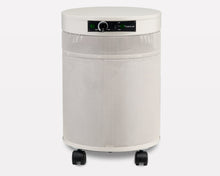
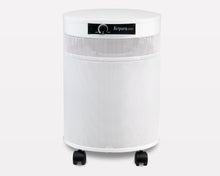
Our commercial HEPA air purifiers for smoke are engineered for exactly this challenge. This matters as much for businesses as for homes: a lounge or former smoking room that keeps smelling of stale tobacco is losing customers, and specialized filtration has reclaimed everything from historic cigar lounges to hotel rooms being converted from smoking to non-smoking — airborne odor dropping within hours and embedded odor fading over the following weeks as filtration and cleaning work together.
2. For surface tar (the remediation solution). An air purifier cannot clean your walls. For existing residue and thirdhand smoke:
- Clean all hard surfaces with a powerful degreasing agent such as a solution of Trisodium Phosphate (TSP).
- For walls and ceilings, after cleaning, use a shellac-based stain-blocking primer before repainting. This seals the tar residue and prevents it from bleeding through the new paint.
The tar that settles on your walls is part of a bigger problem — see our full walkthrough, How to Remove Cigar Smoke & Odor.
Conclusion
The sticky truth about tar is that it's a physical, particulate pollutant — not an intangible smell or gas. That scientific fact dictates the solution: to remove a physical particle from the air, you need a physical barrier. True HEPA filtration is that barrier, paired with activated carbon for the nicotine and odor. By understanding the science and deploying a system with the right technology and power, you take a definitive step toward protecting your lungs from damage and your space from lasting contamination.
Your technical questions about tar removal, answered
Does a HEPA filter get clogged with tar? Yes — and that's precisely its job. A HEPA filter in a heavy smoking environment captures a significant amount of sticky tar and will clog and need replacement more frequently than one in a non-smoking home. That's a clear sign it's working, protecting your lungs from what it has trapped.
Can I just use a carbon filter for the smoke smell? Will that also remove tar? A substantial carbon filter is essential for removing odors and gaseous chemicals, including nicotine, but it will not remove the tar particles. The two filter types perform different, non-interchangeable jobs. A complete solution needs both HEPA (particles/tar) and carbon (gases/odor).
Are “low-tar” cigarettes or cigarette filters effective at reducing indoor air pollution? No. Cigarette filters reduce tar inhaled by the smoker (mainstream smoke) but do nothing to stop the tar released from the burning tip (sidestream smoke), which is a major contributor to indoor air pollution and contains an even higher concentration of harmful chemicals.
How do I know if an air purifier has a “True HEPA” filter? Look for certified language such as “captures 99.97% of airborne particles down to 0.3 microns.” Be cautious of vague terms like “HEPA-like,” “HEPA-type,” or “99% HEPA” — these don't meet the standard and won't capture the finest tar particles as effectively.
Related guides
- How to Remove Cigar Smoke & Odor: The Definitive Guide
- Best Cigar Air Purifiers: What Actually Works
- Why HEPA Isn't Enough: The Role of Activated Carbon for Cigar Smoke
References: National Cancer Institute, definition of tar. Mayo Clinic Health System, thirdhand smoke. U.S. EPA, “Guide to Air Cleaners in the Home,” secondhand smoke classification, and ozone-generator warnings.