The Truth About Smokeless Ashtrays: Why Passive Filtration Isn’t Enough for Clean Air

TL;DR: A smokeless ashtray is a battery-powered tray with a tiny fan and a few grams of carbon. It captures a fraction of the sidestream smoke rising off a resting cigarette — but does nothing about the exhaled mainstream smoke, the fine PM2.5 that fills the room, or the gaseous VOCs that cause lingering odor and thirdhand-smoke residue. To actually clear a smoking room you need whole-room scrubbing: high CFM, True HEPA, and pounds of activated carbon.
If you've ever stepped into a smoking lounge, a cigar bar, or a home office where someone enjoys a pipe, you know the "cloud." It isn't just the visible smoke that lingers — it's the heavy, acrid scent that clings to upholstery, curtains, and lungs long after the ember is out. In an attempt to reclaim their air, many people reach for the smokeless ashtray, a small tray that promises to suck up smoke at the source. The reality is that most of these devices are little more than glorified desk fans with a thin layer of foam. Here's the physics of why a plastic tray brings a knife to a gunfight — and what actually works.
Understanding the Enemy: The Two Faces of Smoke
Secondhand smoke isn't a single uniform cloud. It has two components. Mainstream smoke is what the smoker inhales and exhales. Sidestream smoke drifts directly off the burning end of the cigarette or cigar — and per the CDC, it's chemically different, carrying higher concentrations of many of the most toxic compounds, including carcinogens. Both are hot gases and extremely light particles, so they rise fast and mix into the entire volume of the room almost instantly. You're not trying to capture a slow-moving cloud; you're trying to filter thousands of microscopic particles and gaseous chemicals that have already filled the space.
Tobacco and cannabis smoke together contain over 7,000 chemicals, including formaldehyde, benzene, and carbon monoxide. To clear the air, a device has to beat two very different enemies: particulates and gases.
The Particulate Problem
The visible part of smoke is tiny solid and liquid droplets. Per the EPA, these particulates (PM2.5) are small enough to bypass the body's natural filters and lodge deep in the lungs. A smokeless ashtray's rudimentary filter might catch large ash, but the fine "blue" smoke passes straight through and back into the room.
The Gaseous Phase
This is where consumer devices fail entirely. The smell of smoke is a gas — you cannot filter a gas with a mesh screen or thin foam. You need a chemical bond. Without a large amount of activated carbon, the odor simply recirculates and eventually settles into carpet and walls.
Localized Capture vs. Whole-Room Purification
The core design philosophy is what separates these tools. One attempts localized capture; the other continuously scrubs the entire environment.
The Smokeless Ashtray: A Miniature Smoke Funnel
It's a small, usually battery-operated fan in an ashtray casing, with a thin mesh pad lightly coated in activated carbon. It's designed to pull some sidestream smoke down into a small chamber before it escapes. Think of catching a rainstorm with a single coffee cup — it catches the drops that fall directly in and has no effect on the downpour everywhere else. Its effective range is measured in inches, not feet. Why they fail:
- Lack of static pressure: tiny low-voltage fans can't overcome the natural buoyancy of hot, rising smoke, so it drifts right past the device.
- Media surface area: a commercial purifier holds 15–30 pounds of activated carbon; a smokeless ashtray holds a few grams, saturating and going useless within hours of heavy use.
- Noise vs. performance: to move meaningful air a tiny fan has to spin at very high RPM, creating a distracting high-pitched whine.
The Air Purifier: A Room-Sized Air Scrubber
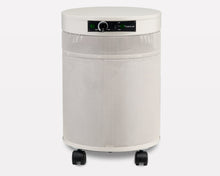
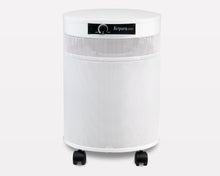
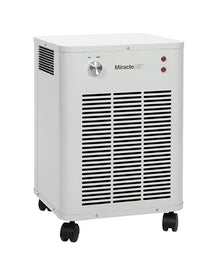
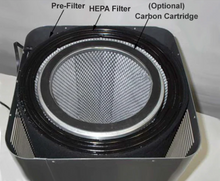
A commercial air purifier is built around a robust motor that moves a massive volume of air, continuously pulling the whole room's air through a multi-stage filter stack: a pre-filter for large particles and ash, a True HEPA filter capturing 99.97% of particles at 0.3 microns (all the solid components of smoke), and a deep bed of activated carbon — pounds of it — to adsorb the gaseous VOCs and odors that pass through everything else.
The Commercial Standard: How to Actually Remove Smoke
At Commercial Air Purifiers we believe in "overkill" engineering. To eliminate smoke you don't look for a better ashtray — you look for a unit that moves the room's entire air volume through heavy-duty media multiple times an hour.
1. CFM (Cubic Feet per Minute)
The most important metric in smoke removal is CFM — the volume of air the machine processes. In a standard office, 4 air changes per hour (ACH) may be enough; in a cigar lounge or any room where smoke is present, aim for 8 to 12 ACH.
To find exactly how much power your space needs, use our CFM Calculator.
2. Deep-Bed Activated Carbon
Killing the smell requires adsorption — gas molecules sticking to carbon's surface. A smokeless ashtray uses a carbon-coated sponge; a commercial unit uses pounds of granulated macroporous carbon, so even stubborn cigar and heavy-tobacco odors are neutralized before the air is exhausted.
3. Medical-Grade HEPA
Once odors are handled, the particulates must be captured. ASHRAE recommends high-efficiency filtration for any indoor environment where pollutants are generated. A True HEPA filter captures 99.97% of particles down to 0.3 microns, usually protected by a pre-filter so ash doesn't clog the expensive HEPA media.
Commercial vs. Residential: The Duty Cycle Difference
Why not just use a high-end residential purifier? Because residential units are designed for dust and pollen, not the relentless onslaught of smoke.
- Metal housing: smoke residue is oily and sticky. Plastic housings can absorb the smell over time and become a source of odor themselves; commercial units use powder-coated metal that cleans up and doesn't off-gas.
- 24/7 duty cycles: smoke lingers long after the cigarette is out. Commercial units use industrial-grade motors built to run around the clock without overheating or losing CFM.
- Serviceability: commercial machines give easy access to heavy-duty filters, keeping total cost of ownership lower than constantly replacing cheap plastic units.
The Thirdhand Smoke Problem
The most overlooked long-term issue is thirdhand smoke — the sticky, toxic residue smoke leaves on every surface. A smokeless ashtray does virtually nothing to prevent it, because it lets the vast majority of smoke circulate and settle. That's why a room with only a smokeless ashtray still develops a permanent stale-smoke smell. A commercial purifier, by constantly removing airborne particles and VOCs, dramatically reduces how much residue can form on walls, furniture, and carpet — preventing the lingering odor and reducing the health risks of that toxic film.
Practical Steps for a Smoke-Free Environment
- Source capture: use an exhaust fan where possible, but supplement it with an air purifier.
- Calculate your needs: measure the room (L × W × H) and use our CFM Calculator to determine the necessary CFM.
- Positioning: place the purifier near the zone of origin (where people smoke) with 360-degree intake clearance.
- Filter maintenance: in smoking environments, check pre-filters monthly. A brown, sticky film is tar that didn't make it into your lungs — replace it to maintain airflow.
Frequently Asked Questions
Do smokeless ashtrays actually work for health protection? Not effectively. They may catch some visible ash, but they lack the CFM and filtration efficiency to remove the fine PM2.5 particulates or toxic gases that pose the greatest health risks per the CDC.
Can I use a smokeless ashtray and an air purifier together? Yes. The ashtray may capture a very small percentage of smoke at the source, slightly lessening the load on the purifier — but the purifier still does well over 99% of the actual air cleaning.
Can I just put a better filter in my smokeless ashtray? Generally no. The tiny fans aren't powerful enough to pull air through dense HEPA or carbon media; adding resistance just burns out the motor or lets air leak around the sides.
What's more important for smoke — HEPA or carbon? Both are essential and do different jobs. HEPA removes the solid particles (visible smoke and PM2.5); activated carbon removes the gaseous VOCs (the smell and harmful chemicals). An effective smoke eater needs a robust version of both.
How much carbon do I need for cigar smoke? For heavy smoke we recommend a minimum of 15 lbs of activated carbon. Anything less saturates too quickly, leading to "breakthrough" where the smell returns.
Is a smokeless ashtray enough for a small office? Only if you don't mind it still smelling like smoke. For crisp air you need a unit capable of at least 200–300 CFM in a standard small room for constant scrubbing.
Conclusion: Stop Masking, Start Scrubbing
A smokeless ashtray is a novelty, not a solution. When you're dealing with the health implications and property damage of smoke, "good enough" isn't good enough. You need equipment that respects the laws of physics — high CFM, massive carbon loads, and the durability to run until the job is done. Browse our commercial-grade smoke eaters and clear the air for good.
Related guides
- Smoke Eater vs. Air Purifier: Which Does Your Bar Need?
- Best Air Purifier for Cigarette Smoke
- Activated Carbon Air Purifiers: Removing VOCs & Odors
- Why HEPA Isn't Enough: Activated Carbon for Cigar Smoke
Ready to improve your air quality? Explore our Smoke Removal collection, or contact our team for a recommendation tailored to your space.