The Blueprint: How to Build a Professionally Ventilated Home Cigar Room

By the experts at Commercial Air Purifiers
Building a dedicated home cigar room is one of the most rewarding projects an aficionado can take on — and one of the easiest to get wrong. After consulting on countless home lounge projects, we can tell you the difference between a room that works and a room that fails is never the furniture or the humidor. It is the air management system. A functional cigar lounge is an engineered system, not just a well-decorated room.
This is the complete blueprint we walk our customers through: how to choose the room, seal it, establish negative pressure with exhaust and makeup air, size the in-room purifier, and keep the whole system performing — plus how to run the room on the nights you actually fill it with friends.
TL;DR — The Blueprint in Five Moves
- Isolate: Pick a room with an exterior wall, permanently seal its central HVAC supply and return vents, and air-seal the door, outlets, and trim.
- Exhaust: Install an inline duct fan sized for a minimum of 15 air changes per hour (ACH), vented directly outdoors — this creates the negative pressure that keeps smoke from migrating.
- Supply: Provide makeup air, most simply via a 1" to 1.5" undercut at the bottom of the door.
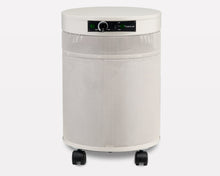
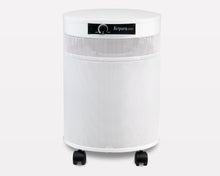
- Purify: Add a recirculating commercial smoke eater sized for 8–10 ACH, with a true HEPA filter and 15+ pounds of activated carbon.
- Maintain: Clean the pre-filter monthly; replace carbon roughly every 4–6 months for daily smokers, 9–12 months for weekend smokers.
Why Cigar Smoke Demands an Engineered System
Tobacco smoke is one of the most complex and invasive indoor pollutants. The CDC has identified more than 7,000 chemicals in secondhand smoke, and it attacks your home in two distinct phases:
- The particulate phase: fine PM2.5 particles and sticky, oily tar droplets — the visible haze that yellows walls, films leather, and clogs filters.
- The gas phase: volatile organic compounds (VOCs) that pass straight through a HEPA filter. This is the source of the stale "morning after" odor.
Worse, what settles doesn't stay put. Thirdhand smoke residue clings to walls, fabrics, and dust, can react with other indoor compounds to form new pollutants, and continues to off-gas for months. That is why every decision in this build serves three engineering principles: isolation (a sealed chamber), exhaustion (mechanically removing contaminated air outdoors), and purification (continuously scrubbing the air that stays in the room).
The single biggest mistake we see: leaving the room connected to central HVAC. Your furnace and air conditioner become a highly efficient smoke distribution network, contaminating the whole house and coating your ductwork with odorous residue. Whole-house HVAC filtration is never the answer for heavy smoke — the project begins with total isolation.
Step 1: Choose the Right Room
Room selection determines half your cost and most of your headaches.
- Exterior wall (or roof access): Your exhaust must vent directly outdoors — never into an attic, crawlspace, or garage. A room with an exterior wall dramatically simplifies and cheapens the duct run.
- A door that closes: The room must be separable from shared living space. Basements, dens, sunrooms, and finished garages are the usual candidates; a basement or main-floor room set apart from primary living areas is ideal.
- Hard surfaces win: Hardwood or tile flooring, leather seating, and semi-gloss paint shrug off smoke. Wall-to-wall carpet, heavy drapes, and velvet upholstery act as sponges for tar and thirdhand residue. Leather resists smoke absorption far better than porous fabrics.
- Game rooms, take note: If your lounge doubles as a billiards room, you're managing a second pollutant — cue chalk dust, a fine mineral particulate that hangs in the air for hours. It makes a robust, washable pre-filter on your purifier even more important, and favors a unit in a sturdy metal housing that can survive a bump from a cue.
Step 2: Seal the Chamber
Smoke exploits every crack. Before any equipment goes in, turn the room into a well-sealed container.
Decommission the HVAC
Locate the supply and return vents and seal them permanently. Closing the louvers is not sufficient — cap the ducts with sheet metal, seal airtight with mastic, then fit a solid cover for a clean look.
Air-seal the envelope
- Door: A solid-core exterior door beats a hollow-core interior door for both smoke and sound. Install full weatherstripping around the frame and a quality rubber door sweep. (You'll modify the sweep for makeup air in Step 4.)
- Outlets and switches: Electrical boxes leak air. Remove cover plates and add inexpensive foam gaskets.
- Gaps and cracks: Caulk the joints between walls and floor/ceiling trim and around window frames with paintable caulk.
Step 3: Exhaust and Negative Pressure — the Engine
The exhaust fan is what protects the rest of your house. By mechanically pulling more air out of the room than leaks in, it holds the lounge at negative pressure: when the door opens, air flows into the cigar room, never out.
How much exhaust? The ACH target
Air Changes per Hour (ACH) is the professional benchmark — how many times per hour the room's entire air volume is replaced. ASHRAE Standard 62.1 calls for very high ventilation rates in smoking environments (commercial lounges can run 30+ ACH). For a home cigar room we recommend a firm minimum of 15 ACH of exhaust.
Sizing the fan: the CFM formula
CFM = (Room Volume in Cubic Feet × Target ACH) ÷ 60
Example: a 16 ft × 12 ft room with an 8 ft ceiling is 1,536 cubic feet. At 15 ACH: 1,536 × 15 ÷ 60 = 384 CFM. Choose a fan that slightly exceeds the requirement, and run your own numbers with our free CFM calculator.
Choosing and placing the hardware
- Use an inline duct fan, not a bathroom fan. Inline fans are more powerful, more durable, and — because they mount inside the ductwork rather than in the ceiling — much quieter in the room.
- Intake high, opposite the door. Smoke rises, so mount the exhaust intake grille high on a wall across the room from the makeup-air source. Air then sweeps the length of the room on its way out.
- Vent directly outdoors through an exterior wall or roof with rigid, smooth ducting. Unless you have professional-level experience, have the fan, duct run, and exterior vent installed by a pro — improper installation risks back-drafting, moisture problems, and code violations.
Step 4: Makeup Air — the Lungs
Air is a closed system: exhaust 384 CFM out and 384 CFM must come in from somewhere. Without a planned intake path, the fan starves and the system fails.
For most homes, a passive supply is the practical answer: a 1" to 1.5" gap under the sealed door. The exhaust fan's negative pressure actively pulls makeup air from the hallway through that gap — a controlled, always-inward flow. The professional-grade alternative is an active, ducted makeup-air system that tempers incoming air to match your room's climate; it is the costly option, but worth discussing for large rooms or extreme climates. One note on comfort: an exhaust system does dump conditioned air outdoors, which is exactly why the in-room recirculating purifier in Step 5 carries the day-to-day load.
Step 5: The In-Room Smoke Eater — the Polisher
Even at 15 ACH, a full air exchange takes four minutes — plenty of time for a thick haze to build while cigars are lit. The exhaust system is for containment; the recirculating purifier is for comfort and real-time cleaning. One cannot replace the other: a purifier creates no negative pressure, and an exhaust fan can't scrub the air fast enough to keep the room pleasant.
Sizing by scenario
Size the purifier with the same CFM formula. Targets from our sizing work across hundreds of rooms:
| Scenario | Purifier target |
|---|---|
| Game/billiards room, non-smoking | 6–8 ACH |
| Engineered cigar room (with 15 ACH exhaust running) | 8–10 ACH |
| Poker night / party peak load, multiple smokers | 10–12 ACH |
| Cigar room relying on the purifier alone (no exhaust) | 15–20 ACH |
What to look for
- Washable metal pre-filter: Tar hitting a HEPA filter seals it shut like glue. A cleanable tar-catching pre-filter is the cheapest insurance in the system — and essential if chalk dust is in play.
- Massive activated carbon bed: Carbon is measured in pounds, not ounces. Look for deep-bed canisters in the 15–25+ lb range; blends that include potassium permanganate chemically destroy odor compounds rather than merely trapping them. Thin coated pads saturate almost instantly against cigar smoke.
- True HEPA filter: for the fine particulate and tar that make up the visible smoke.
- Metal housing: Residential plastic housings absorb acidic tar and permanently off-gas an ashtray smell — the "plastic sponge" effect. Powder-coated steel or aluminum is non-porous and wipes clean.
- Sealed filter chamber and quality motor: Gasketed, fully sealed chambers ensure air can't leak around the media. EC (electronically commutated) motors run smoother, quieter, and more efficiently than basic AC motors, with precise variable speed.
- Oversize for silence: A 600–800 CFM unit loafing at half speed moves the same air as a small unit screaming at 100% — at a fraction of the noise. Buy power overhead and run low.
- No ozone. Ever. Per the EPA, ozone generators should never be operated in occupied rooms. Choose mechanical filtration.
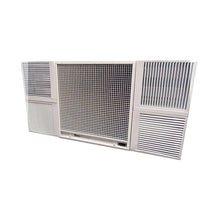
Our commercial-grade smoke eaters are built to exactly this specification — high CFM, true HEPA, deep carbon beds, and metal construction.
Placement
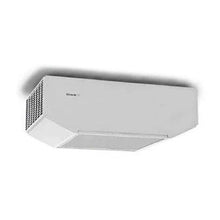
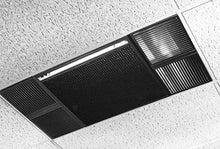
The gold standard is a flush ceiling mount in the center of the room: it pulls rising smoke up and pushes clean air down along the walls. If ceiling mounting isn't an option, place a freestanding unit high on a shelf or pedestal, centrally located, at least 1–2 feet off walls and out of corners so it can draw from 360 degrees.
Keeping the System Honest: Maintenance
- Pre-filter: wash monthly.
- Carbon: replace roughly every 4–6 months for daily smokers, 9–12 months for weekend smokers. The field test is simple: if the room smells stale the morning after a session, the carbon is saturated.
- HEPA: replace on the manufacturer's schedule, typically every 6–12 months in a smoking room.
- Don't skip it: a neglected filter doesn't just stop working — saturated media can re-release trapped odors back into the room.
Running the Room: Hosting and Entertaining
The system earns its keep on the nights the room is full. Here's the routine we recommend to customers who entertain.
Before guests arrive. Remove throw pillows, blankets, and fabric extras — they're odor magnets. Prime the room by running the purifier on its highest setting with the door closed for an hour before the first cigar. Stock large, deep ashtrays at every seating area, and set them near the purifier's intake so sidestream smoke from resting cigars rides the intake current. For the full experience: two or three cigar selections of varying strength, guillotine and punch cutters, and butane torch lighters (skip sulfur matches and fluid lighters, which taint flavor). Classic pairings — single malt, bourbon, dark rum, cognac, or espresso — with sparkling water and dark chocolate as palate cleansers.
During the session. Run the purifier on high, not auto or quiet mode — peak load is the whole point. Research on multiple simultaneous smokers shows particle levels can spike to hazardous concentrations within minutes, so this is no time for eco mode. One large unit handles a 400–500 sq ft room; go to two units for larger open spaces (two smaller units on opposite sides of the room can also outperform one big one). Resist cracking a window in cool weather — it wrecks your climate and the drafts can push smoke out of the room instead of into your exhaust.
The morning after. Empty every ashtray into a sealed bag and take it straight to the outdoor trash — never leave ashtrays open overnight. Run a purge cycle: purifier on high for 2–4 hours (12–24 hours after a big party), then medium-low for another day to catch off-gassing VOCs. Wipe hard surfaces — card table, chair arms — with a 50/50 white vinegar and water solution before residue sets.
Hosting smoke-sensitive guests. For guests with asthma or allergies, run purification on high for 24–48 hours before they arrive, and consider an inexpensive PM2.5/VOC monitor for real-time proof your containment is working. And if you only host one big smoke night a year, renting a commercial-grade unit for the event is a legitimate, cost-effective alternative to buying.
The Build Checklist
- Select & measure: choose a room with an exterior wall; record length, width, height.
- Isolate & seal: cap HVAC vents; seal door, outlets, windows, trim.
- Calculate exhaust: size the fan for a minimum 15 ACH.
- Install exhaust: inline duct fan, intake high and opposite the door, professionally vented directly outdoors.
- Create the makeup-air path: 1"–1.5" door undercut.
- Calculate purification: size the smoke eater for 8–10 ACH (15–20 if it's working alone).
- Select & place the purifier: pre-filter + 15 lb+ carbon + true HEPA in a metal housing, ceiling-mounted or centrally placed.
Common Technical Questions
Do I need an HVAC contractor? For the exhaust fan, duct run, and exterior vent — yes, unless you have professional-level experience. Improper installation risks back-drafting, moisture problems, and code violations.
Can a window fan handle the exhaust? No. It lacks certified CFM, can't hold negative pressure, and seals poorly, letting smoke leak back into the house.
Can I hide the purifier in cabinetry? Yes, if the cabinet is built with intake and exhaust grilles so airflow isn't restricted. Flush ceiling-mount models are the cleanest-looking solution of all.
What should I budget? Plan for the inline duct fan, rigid ducting and exterior vent cap, professional installation labor, and the commercial smoke eater itself. It's a significant investment, but it is the non-negotiable difference between a cigar room and a smoke problem.
Conclusion
Approach the cigar room as an engineering project and it will reward you for decades: isolation, exhaustion, supply, and purification working as one system, so your sanctuary never compromises the air in the rest of your home. Planning a build? Our specialists offer free consultations to help you size the exhaust and pick the right smoke eater — get in touch.