Air Ionizer vs. Air Purifier: The Truth About "Filterless" Cleaning and Your Health

By the Team at Commercial Air Purifiers
If you are shopping for a device to clean your air, you have likely encountered the seductive marketing of the "Air Ionizer." The pitch is almost irresistible: silent operation, futuristic technology, and best of all, no filters to buy ever again.
It sounds like the perfect evolution of air cleaning technology. Why would you want a bulky machine with a loud fan and expensive replacement filters when you could have a silent, filterless tower that magically zaps particles out of the air?
But as with most things that sound too good to be true, the reality is far more complicated—and potentially dangerous.
At Commercial Air Purifiers, we engineer systems for cigar lounges, industrial warehouses, and medical facilities. In these high-stakes environments, we don't rely on magic; we rely on physics. The debate between Air Ionizers vs. Air Purifiers isn't just a matter of preference; it is a matter of safety and efficacy. While one technology reliably traps pollutants, the other often generates harmful byproducts while leaving the dirt right where you can breathe it in.
Here is the unvarnished truth about ionic air cleaners versus mechanical air purifiers, and why we believe "Overkill" engineering is the only safe path to clean air.
The Core Difference: Trapping vs. Dropping
To understand why we favor one technology over the other, you have to understand the fundamental mechanism of how they handle dirt.
1. The Air Purifier (The Trap)
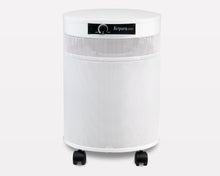
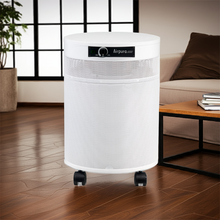
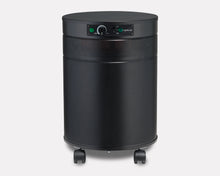
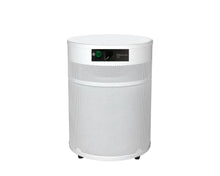
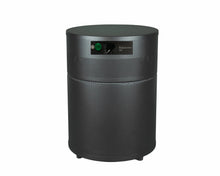
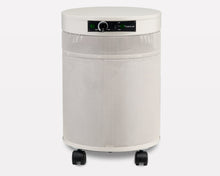
A standard commercial air purifier (or "mechanical air cleaner") uses a high-torque fan to physically force air through a dense web of fibers.
-
The Physics: It uses HEPA (High-Efficiency Particulate Air) filtration. Particles are trapped in the filter mesh like fish in a net.
-
The Result: The pollutant is physically removed from the room and locked inside the machine.
2. The Air Ionizer (The Weight)
An ionizer (or "ionic air cleaner") uses high voltage to electrically charge air molecules. It sends out a stream of negative ions.
-
The Physics: These negative ions attach themselves to airborne particles (dust, smoke, pollen), giving them a negative charge. These charged particles are then attracted to positively charged surfaces—like your walls, your TV screen, the floor, or the collection plates inside the unit.
-
The Result: The particle becomes heavy and falls out of the air. It is not necessarily removed from the room; it is just moved from the air to a surface.
The Hidden Dangers of Ionizers
While the concept of "dropping" dust out of the air seems clever, it introduces two significant problems that mechanical air purifiers do not have.
1. The "Black Wall" Effect
Because ionizers charge particles to make them stick to surfaces, those particles have to go somewhere. Often, they stick to the nearest surface—the wall behind the unit.
-
The Consequence: Users often report a "black soot" or shadow appearing on walls and curtains near ionic cleaners. This is the dirt that was in the air, now plastered onto your paint.
-
The Risk: If you walk across the carpet or disturb the curtains, those particles (which were never trapped, just grounded) can become airborne again. You end up re-breathing the same pollution.
2. The Ozone Threat
This is the dealbreaker for us in the commercial sector. To create ions, these machines use high-voltage "corona discharge." A common byproduct of this process is Ozone (O3).
-
The Health Risk: Ozone is a potent lung irritant. According to the Environmental Protection Agency (EPA), even relatively low amounts of ozone can cause chest pain, coughing, shortness of breath, and throat irritation. It is a known asthma trigger.
-
The Regulation: The risks are so documented that the California Air Resources Board (CARB) has banned the sale of air cleaning devices that produce ozone above a specific (very low) limit.
Many residential ionizers circumvent this by claiming "low ozone emission," but in a small, closed room, ozone can accumulate to dangerous levels.
The Commercial Standard: Why We Use Mechanical Filtration
In a hospital, a welding shop, or a cigar lounge, you will never see a standalone ionizer being used as the primary defense. You will see mechanical Air Purifiers. Here is why the pros stick to HEPA and Carbon.
1. Reliability and Capacity
A commercial air purifier is a tank. It holds pounds of dirt.
-
Ionizer: Often relies on "collection plates" that must be wiped clean. Once the plate is coated in dust (often in a few days), efficiency drops to near zero until you clean it again.
-
Air Purifier: A deep-pleated commercial filter has massive surface area. It can run for 6 to 12 months, maintaining high efficiency without daily maintenance.
2. Odor Removal (The Carbon Factor)
Ionizers are notoriously bad at handling odors (VOCs). They cannot trap gas. Some manufacturers claim the ozone "neutralizes" odors, but as discussed, using ozone is dangerous.
-
The Solution: Mechanical purifiers use Activated Carbon. We use deep-bed canisters with 15 to 30 pounds of carbon. This physically adsorbs the gas molecules (smoke, chemical fumes) without releasing anything back into the room.
3. Airflow (The CFM Rule)
To clean a room, you must move the air. Ionizers often have no fan (making them silent) or very weak fans. They rely on the ions drifting out into the room. This is incredibly slow.
-
The Physics: You need CFM (Cubic Feet per Minute). A commercial air purifier uses a powerful motor to cycle the air in the room 6 to 12 times an hour.
When Is an Ionizer Acceptable?
There is a specific type of ionization called Bipolar Ionization (or Needlepoint Bipolar Ionization) that is sometimes installed inside commercial HVAC ducts.
-
The Application: These systems create a plasma field to agglomerate (clump) dust particles, making them larger so the building's central filters can catch them easier.
-
The Caveat: This is an enhancement to mechanical filtration, not a replacement. And even then, it must be UL 2998 validated to produce Zero Ozone.
For standalone, plug-in units? We almost never recommend them. The risks outweigh the benefits.
Sizing Your Solution: The Math of Clean Air
If you are looking for an air purifier because you have a genuine problem—smoke, allergies, or dust—you need to size the machine based on airflow, not marketing claims.
The Air Change Calculation (ACH)
For effective cleaning, you need to exchange the air in the room frequently.
-
Home/Office: 4-6 Air Changes Per Hour.
-
Smoke/High Pollution: 10-12 Air Changes Per Hour.
The Formula:
$\text{Room Volume (L x W x H)} \times \text{Desired ACH} / 60 = \text{Required CFM}$
Example:
A living room or office (20’ x 20’ x 10’) = 4,000 Cubic Feet.
Targeting 6 ACH.
$(4,000 \times 6) / 60 = 400 \text{ CFM}$.
You need a unit that moves 400 CFM.
-
The Reality: Most "Silent" Ionizers move 0 to 50 CFM. They simply cannot cycle the air fast enough to keep up with pollution. A commercial air purifier can easily hit 400-1000 CFM.
Don't Guess. Use our CFM Calculator. Input your room dimensions to see exactly how much power is required to actually clean the air, rather than just charging it.
Comparison Table: Ionizer vs. HEPA Purifier
| Feature | Air Ionizer | HEPA Air Purifier |
| Mechanism | Charges particles to stick to surfaces | Traps particles in dense media |
| Particulate Removal | Low to Moderate (Drops dirt) | High (99.97% captured) |
| Odor Removal | Poor (or masks with Ozone) | Excellent (if Carbon is used) |
| Safety | Risk: Ozone generation | Safe: No byproducts |
| Maintenance | Wash plates weekly | Change filters yearly |
| Noise | Silent (No fan) | White Noise (Fan driven) |
| Wall Cleanliness | Causes "Black Wall" soot | Keeps walls clean |
Frequently Asked Questions
Q: Do ionizers kill viruses?
A: Some studies suggest ions can deactivate viruses on surfaces, but in the air, the science is mixed. The CDC recommends HEPA filtration as the gold standard for removing airborne viral particles. An ionizer might drop the virus to your desk surface, but a HEPA filter removes it from the environment entirely.
Q: Why does my ionizer smell like bleach?
A: That "fresh" or "bleach-like" smell is Ozone. It is often marketed as the smell of a "thunderstorm." If you can smell it, the ozone levels may already be higher than recommended safety limits. We advise turning the unit off immediately.
Q: Are there safe ionizers?
A: Yes, units certified as "Ozone-Free" (UL 2998 standard) do not produce harmful ozone levels. However, they still suffer from the "Black Wall" effect and lack the airflow (CFM) of mechanical purifiers.
Q: Can I use both?
A: Some air purifiers have a built-in ionizer stage. If you buy one of these, ensure the ionizer can be turned OFF. We recommend running the HEPA/Carbon stages for cleaning and leaving the ionizer off to avoid ozone risks.
Conclusion: Trust Physics, Not Futurism
The allure of a silent, filterless machine is strong, but the trade-offs are too high. Between the risk of ozone generation and the mess of "dropped" dust, Air Ionizers simply cannot compete with the reliability and safety of mechanical Air Purifiers.
There is a reason hospitals and industrial labs use HEPA filters and Activated Carbon. It works. It captures the threat and holds it safe until you throw the filter away.
If you are serious about your health, choose "Overkill." Choose a unit with a steel housing, a high-torque motor, and certified HEPA media.
Validate your airflow needs today with our CFM Calculator. Then, browse our collection of Commercial HEPA Air Scrubbers to find a machine that cleans your air without polluting it.
References:
-
U.S. Environmental Protection Agency (EPA). "Ozone Generators that are Sold as Air Cleaners."
-
California Air Resources Board (CARB). "Hazardous Ozone-Generating Air Purifiers."
-
ASHRAE. "Position Document on Filtration and Air Cleaning."
-
Consumer Reports. "Air Purifiers Buying Guide."