The Ultimate Buyer's Guide to Commercial Air Purifiers for Cigar Lounges

By Dan Hennessy, Co-Founder & Editor — Updated 5/19/2026
If you've spent any time researching air purifiers for a cigar lounge, you've probably noticed two things. First, the consumer-purifier blogs all push the same handful of $300–$800 home units that won't keep up in a real lounge. Second, the commercial manufacturers' websites are full of CFM charts and engineering jargon but rarely answer the question you actually have: "what should I buy for my lounge?"
This is a direct answer to that question.
We're a direct dealer for the American manufacturers who build commercial-grade smoke eaters and HEPA air cleaners — Smokemaster, MiracleAir, LakeAir, and EverClear. We sell to cigar lounges, cigar bars, hookah lounges, and tobacco-permitted clubs across the country. The recommendations below come from the conversations we have every week with operators sizing real spaces.
TL;DR — what to buy by space size
| Lounge size | Smokers at peak | Recommended starting point |
|---|---|---|
| Under 500 sq ft (small smoking den, private room) | 1–3 | MiracleAir PM-400 HEPA (single unit) |
| 500–1,200 sq ft (small commercial lounge) | 3–6 | Smokemaster X-11Q, or MiracleAir CM-12 Deluxe ceiling-mount |
| 1,200–2,500 sq ft (mid-size lounge) | 6–12 | Smokemaster X-400, or 2× Smokemaster C-12 ceiling-mount |
| 2,500–5,000 sq ft (large lounge or cigar bar) | 12–25 | 2–3 unit system, typically Smokemaster X-400 + ceiling supplements |
| 5,000+ sq ft | 25+ | Custom multi-unit layout — call us |
If you're outside the lower end of any range (e.g., a 1,300 sq ft lounge with 4 smokers most of the time), size down to the bracket below. If you regularly have heavier smoke load than typical, size up. The rest of this guide explains why.
Why residential air purifiers fail in cigar lounges
A residential air purifier is designed to filter the air in a bedroom 2 to 4 times per hour. The EPA, in its Guide to Air Cleaners in the Home, describes residential portable units as designed for "a single room" with the understood assumption that pollutant generation is low and intermittent.
A cigar lounge breaks both assumptions. Pollutant generation isn't intermittent — it's continuous as long as there are smokers in the room. And the volume of air that needs filtering is dramatically larger. A 1,500 sq ft lounge with 9-foot ceilings contains 13,500 cubic feet of air. To achieve the 8–12 air changes per hour (ACH) that cigar-lounge ventilation actually requires, you need to move 1,800–2,700 cubic feet per minute (CFM) of air through filtration. A typical $400 residential purifier handles 150–250 CFM.
The math doesn't work. You can run six residential units in a single room and still not hit one full air change per hour, because no individual unit can pull enough air through its filter media. Worse, residential carbon filters typically contain a few ounces of activated carbon — enough to handle cooking odors or pet smells, completely inadequate for cigar smoke, which contains gas-phase compounds (formaldehyde, benzene, acrolein, ammonia) that bypass particle filtration entirely.
For context on the gas-phase challenge: the CDC's review of secondhand smoke exposure and health catalogs 7,000+ chemical compounds in tobacco smoke, of which roughly 70 are known human carcinogens. Most of these aren't particulate matter that a HEPA filter catches — they're gas-phase compounds that require activated carbon adsorption to remove. This is why every commercial cigar-lounge air purifier worth buying combines particulate filtration and substantial activated carbon (typically 10–25 pounds per unit, versus a few ounces in residential).
The three specifications that actually matter
You can ignore most of the marketing on consumer air purifier sites. For commercial cigar lounge applications, only three numbers matter:
1. CFM (Cubic Feet per Minute)
CFM is how much air the unit moves through its filtration per minute. To translate CFM into the air-change rate appropriate for your space:
Required CFM = (Room volume in cubic feet × Target ACH) ÷ 60
For 8 ACH (the minimum for a cigar lounge per most professional recommendations):
- 500 sq ft × 9 ft ceiling = 4,500 ft³ → needs 600 CFM
- 1,000 sq ft × 9 ft = 9,000 ft³ → needs 1,200 CFM
- 1,500 sq ft × 9 ft = 13,500 ft³ → needs 1,800 CFM
- 2,000 sq ft × 9 ft = 18,000 ft³ → needs 2,400 CFM
For 12 ACH (better, recommended if you want lounge air to feel "fresh" rather than just "tolerable"):
- 1,500 sq ft × 9 ft = 13,500 ft³ → needs 2,700 CFM
ASHRAE Standard 62.1, the engineering standard for ventilation in commercial buildings, doesn't have a specific cigar-lounge category, but it does specify outdoor air requirements for "smoking lounges" of 60 cfm per person in some editions of the standard. That's a separate requirement — fresh outdoor makeup air — and it's in addition to the recirculated-air filtration that an air purifier provides. We'll come back to ventilation versus filtration below, but for now the takeaway is: aim for 8–12 ACH on filtration as your headline target, and make sure your HVAC system is also providing makeup air per code.
2. HEPA-grade particulate filtration
For particles — the visible cigar smoke, the haze, the stuff that settles on surfaces — you want true HEPA filtration. By the U.S. standard, a true HEPA filter captures 99.97% of particles at 0.3 microns. Some manufacturers offer "Super HEPA" or 99.99% at 0.3 microns for premium applications.
Cigar smoke particles are mostly in the 0.1 to 1 micron range, well within HEPA's effective capture range. A good HEPA stage handles the visible haze, the wall yellowing, and the particulate fraction of the health risk.
What to watch out for: terms like "HEPA-type," "HEPA-like," or "99% efficient at 2 microns" are not true HEPA. They're marketing language for cheaper filter media. For cigar lounges, accept nothing less than true HEPA (99.97% at 0.3 microns) on the particulate stage. The MiracleAir PM-400, MiracleAir CM-12 series, EverClear CM-11, and LakeAir Maxum HEPA all use true HEPA.
3. Activated carbon (weight, not just presence)
For the gas-phase compounds — the odors, the VOCs, the carcinogens that HEPA filters don't catch — you need activated carbon. And the spec that matters here is weight, not just whether carbon is "present" in the unit.
A residential air purifier might contain 1–2 ounces of activated carbon impregnated in a thin pleated filter. A commercial cigar-lounge unit needs 10–25 pounds of granular activated carbon (sometimes paired with potassium permanganate for additional adsorption of specific compounds like formaldehyde).
Here's the carbon stage on the units we sell:
- MiracleAir CM-12 Deluxe — 22 pounds of activated carbon
- EverClear CM-11 — up to 44-pound replaceable carbon kits with optional potassium permanganate blend
- Smokemaster line — uses electrostatic precipitation for particles plus a separate carbon bed for gases; carbon weight varies by configuration but is in the same commercial range
- LakeAir Maxum HEPA — combines HEPA with a substantial carbon stage
If a unit's spec sheet doesn't list the carbon weight in pounds, the carbon stage isn't a meaningful component of the design. That's how you tell residential units pretending to be commercial.
HEPA + carbon, or electrostatic? When to choose which
There are two filter-architecture families to choose between for cigar lounges. Both work; they're optimized for different operational priorities.
HEPA + Activated Carbon (MiracleAir PM-400, MiracleAir CM-12, EverClear CM-11, LakeAir Maxum HEPA)
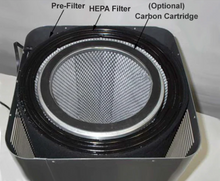
- How it works: Mechanical filtration. Air passes through a pre-filter (catches large particles, extends HEPA life), then through a HEPA media filter (catches 0.3-micron particles at 99.97%), then through a granular activated carbon bed (adsorbs gas-phase compounds and odors).
- Filter replacement cost: Pre-filters every 1–3 months ($30–60), carbon beds every 12–18 months in heavy use ($150–400), HEPA filters every 2–4 years ($300–700). Plan for roughly $300–800/year per unit in replacement filters in a heavy-use lounge.
- Strengths: True HEPA-grade particulate capture, quiet, predictable.
- Tradeoffs: Filter replacement is a recurring expense. Filters can develop bypass leakage over time if not seated properly.
- Best for: Lounges where particulate-grade filtration is a sales pitch ("hospital-grade filtration"), or where you want quieter operation, or where the maintenance staff prefers swapping filters to other procedures.
Electrostatic Precipitation (Smokemaster X-11Q, Smokemaster X-400, Smokemaster C-12)
- How it works: Smoke particles pass through a charging field, become electrically charged, then are collected on washable aluminum collector cells. A separate activated carbon stage handles gases.
- Filter replacement cost: Significantly lower long-term. Collector cells are washed, not replaced (every 4–8 weeks in heavy use). Carbon stage still needs periodic replacement. Plan for $100–300/year per unit in consumables in a heavy-use lounge.
- Strengths: Lowest ongoing cost in heavy-use environments. Smokemaster has been making commercial smoke eaters since the 1970s; the technology is field-proven for cigar lounges specifically.
- Tradeoffs: Requires a maintenance procedure — someone has to pull the cells, wash them, dry them, and reinstall — typically every 4–8 weeks. If the maintenance lapses, the cells become inefficient and you can develop a faint ozone smell. Modern units are designed to minimize ozone, and the EPA notes that properly maintained electrostatic units operate within safe ozone limits, but the maintenance discipline matters.
- Best for: Operators who want the lowest total cost of ownership over a 5–10 year unit lifespan, and who have someone reliably available to do the regular cell cleaning. The vast majority of established cigar lounges run electrostatic for this reason.
If you're not sure which architecture suits you, the rule of thumb is: high-touch, low-overhead maintenance setup (you or a staff member will reliably clean cells) → electrostatic. Low-touch, scheduled-replacement maintenance (you'd rather pay more per year and just swap a filter when a service plan tells you to) → HEPA + carbon. Both work.
Specific recommendations by lounge size
These are starting-point recommendations. The right unit depends on ceiling height, smoke density at peak, layout, and whether the lounge has existing HVAC to integrate with.
Under 500 sq ft (small smoking den or private room)
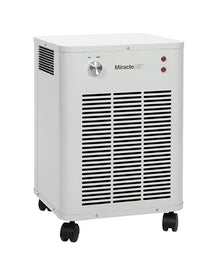
Top pick: MiracleAir PM-400 HEPA Air Cleaner (~400 CFM, true HEPA, integrated carbon pre-filter). Single unit handles a 500 sq ft space at roughly 8 ACH. Good fit for a private smoking room in a residence, a humidor room with seating, or a single cigar-tasting room in a larger operation.
500 to 1,200 sq ft (small commercial lounge)
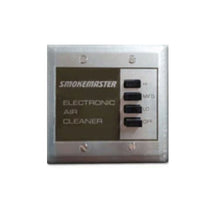
Electrostatic option: Smokemaster X-11Q — 750 CFM, electrostatic precipitator plus activated carbon. The X-11Q is the workhorse for new cigar lounges in the 600–1,000 sq ft range. Single floor-standing unit.
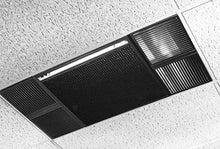
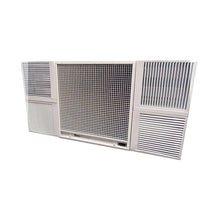
HEPA + carbon option: MiracleAir CM-12 Deluxe — 850 CFM at high speed, ceiling-mounted, with 22 lbs of activated carbon. Ceiling mount keeps the floor clear, important in lounges where seating layout matters.
1,200 to 2,500 sq ft (mid-size lounge or cigar bar)
Single-unit option: Smokemaster X-400 — 1,500 CFM, electrostatic plus carbon. Floor-standing. Designed specifically for cigar lounges in this size bracket.
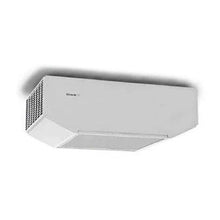
Multi-unit ceiling option: 2× Smokemaster C-12 ceiling mounts (725 CFM each, 1,450 CFM combined). Better for lounges with high ceilings or open floor plans where you want air handling distributed across the space.
2,500 to 5,000 sq ft (large lounge)
This is multi-unit territory. A typical configuration is 1 floor-standing unit (Smokemaster X-400 or equivalent) in the highest-traffic seating area plus 2–3 ceiling mounts distributed across the space. Total system CFM should reach 3,500–6,000 depending on whether you're targeting 8 or 12 ACH.
We don't recommend buying this without a sizing conversation. The right configuration depends on layout details that don't show up on a spec sheet.
5,000+ sq ft, or unusual layouts
Custom multi-unit design. Email us with the floor plan, ceiling height, peak smoker count, and existing HVAC specs. We'll come back with a configuration and a quote.
Ventilation vs. filtration: you need both
A frequent confusion: an air purifier doesn't replace your HVAC system. It's a recirculation device — it cleans the air that's already in the lounge. You also need fresh outdoor air being brought in to dilute carbon dioxide buildup, and the same volume of stale air being exhausted.
ASHRAE Standard 62.1 sets minimum outdoor air requirements for ventilation. For smoking-permitted spaces, requirements are stricter than for general commercial space — most editions of the standard reference 60 cfm per person of outdoor air for designated smoking lounges. This is in addition to the recirculation-filtration that purifiers provide.
In practice: if your lounge has working HVAC sized for the occupancy and a smoke-permitted ventilation rate, the air purifier handles the filtration of recirculated air. If your HVAC isn't sized for smoke load, you may need to either upgrade the HVAC (adding makeup-air units or higher-rate exhaust) or supplement with negative-pressure room design (where the lounge is at lower pressure than adjacent spaces, so smoke can't migrate out through doorways). Negative-pressure design is more complex and usually warrants a mechanical engineer; we can refer you if that's the conversation you need.
For lounges that meet ventilation code and just need particulate-and-gas filtration on the recirculated air, commercial air purifiers like the ones above are the complete solution.
A note on lounge materials and thirdhand smoke
Filtration handles the air, but the surfaces in your lounge determine how much smoke residue accumulates and re-releases over time. Porous materials — carpet, upholstered fabric, heavy drapery — trap the sticky tar and nicotine residue of thirdhand smoke and slowly off-gas it back into the room, which is why a fabric-heavy lounge keeps smelling of stale smoke even after the visible haze clears. Non-porous surfaces like hardwood, leather, tile, and stone don't hold residue the same way; they wipe clean and let your air purifier do its job without fighting a reservoir of settled contaminants. If you're building out or refreshing a lounge, leaning toward hard, wipeable surfaces makes every dollar of filtration work harder.
Common mistakes operators make
A handful of patterns we see repeatedly:
- Buying based on square footage alone. A 1,500 sq ft lounge with 14-foot ceilings has 50% more air volume than the same square footage at 9-foot ceilings. Always size by cubic feet, not square feet.
- Underestimating peak smoker count. Operators often size for the typical evening (5–6 smokers) and end up overwhelmed on Friday nights (12+ smokers). Size for peak.
- Skipping the carbon stage. A unit with HEPA but no meaningful carbon stage will keep the air looking clean — the haze goes away — but the lounge will still smell like cigars to the next morning's customer. Carbon is what makes the difference between "the smoke clears" and "the lounge smells fresh."
- Buying one unit that's "just barely enough." If you size for exactly 8 ACH, you have zero headroom for filter loading (CFM drops as filters fill), peak smoker nights, or future expansion. Size up by one bracket if budget allows.
- Ignoring maintenance from day one. The best unit will underperform on a 6-month-overdue filter. Pick the architecture that matches your actual maintenance reality, not the one you wish you were.
- Treating the air purifier as a substitute for ventilation. It isn't. Both are required.
Maintenance and total cost of ownership
For a representative 1,500 sq ft cigar lounge running an electrostatic system (Smokemaster X-11Q + supplemental ceiling C-12):
- Equipment cost: ~$5,000–$8,000 depending on configuration
- Year 1 consumables (carbon refills, pre-filters): ~$300–500
- Ongoing labor (cleaning collector cells every 4–8 weeks): ~30–45 min per cleaning, 8–12 times per year
- Year 2–5 consumables: ~$200–400/year average
- Major service (electrostatic cell rebuild or HEPA replacement): every 5–8 years, ~$500–1,000 per unit
A HEPA + carbon system in the same space will run about $7,000–$10,000 in equipment and $500–900/year in consumables, with less manual labor for cleaning.
Over a 10-year horizon, total cost of ownership is in the same ballpark for both architectures — electrostatic is lower in consumables but requires more attentive maintenance labor.
Where to start
If you're sizing a lounge right now and want a recommendation, the fastest path is to email us at info@commercialairpurifiers.net with:
- Square footage and ceiling height
- Typical and peak smoker counts
- Existing HVAC (if known)
- Whether you prefer floor-standing or ceiling-mounted units
- Whether you have a strong preference for electrostatic or HEPA architecture, or want our recommendation
We'll come back the same business day with a configuration suggestion and a quote. We're a direct dealer for all the manufacturers above, so pricing is at manufacturer-set rates without distributor markup.
If you'd rather browse first, the Smoke Removal collection has every model we stock for cigar-lounge applications, organized so you can filter by space size and architecture.
Related guides
- How to Calculate CFM & ACH for a Cigar Lounge
- The 5 Best (and 3 Worst) Places to Install Your Cigar Lounge Air Purifier
- What's the True Cost? A Guide to Cigar Lounge Air Purifier Maintenance
- Smoke Eaters vs. Air Purifiers: What's the Best Choice for a Cigar Bar?
- Why HEPA Isn't Enough: The Role of Activated Carbon for Cigar Smoke
- Beyond the Haze: Protecting Employee Health in a Cigar Lounge
Dan Hennessy co-founded Commercial Air Purifiers with Derek K. in St. Paul, MN. The company is a direct dealer for Smokemaster, MiracleAir, LakeAir, and EverClear.